
MSW – Master in Social Work
Best Colleges for Master Social Work in Tamil Nadu: Top MSW Social Work Colleges for Social Work Career
- Hands-on Training
- Faculty with International Experience
- Advanced Curriculum
- Upto 100% Scholarship based on merit

About the Course
MSW Social Work in Tamil Nadu is a specialized postgraduate program for aspiring social workers, community leaders, and welfare professionals. Offered by best colleges for Social Work in Tamil Nadu, this degree combines social welfare theory with community development, human services, and social policy. Students master casework, group work, community development, social administration, and welfare policy. The curriculum emphasizes practical learning through field internships, community projects, case studies, and mentorship from experienced social workers. Graduates gain social work expertise and community impact capability, enabling them to launch careers as social workers, community leaders, and welfare professionals across Tamil Nadu’s social and welfare sectors.
Why Choose an MSW Social Degree?
Choosing best colleges for Social Work in Tamil Nadu offers strategic advantages for aspiring social workers and community leaders. First, top MSW colleges provide specialized curriculum designed with social work faculty, community experts, and welfare leaders ensuring practice excellence and social impact. Second, colleges feature field placements, community centers, and social service facilities matching national standards. Third, the program guarantees strong placement for social workers with average packages of ₹4-8 lakhs. Fourth, graduates enjoy meaningful career satisfaction in India’s expanding social welfare, community development, and social services sectors experiencing growing impact. Finally, the scope of best colleges for Social Work in Tamil Nadu remains strong with continuous demand for skilled social workers across Tamil Nadu’s NGOs, government agencies, and community organizations.
Advanced Commerce Curriculum
Specialized MSW curriculum ensures social workers master casework, community development, and welfare policy aligned with social sector needs.
Research & Practical Learning
Access to field placements, community centers, and mentorship from experienced social workers ensuring practical expertise throughout program.
Expert Faculty & Mentorship
Excellent career scope for community leaders, welfare professionals, and social change agents with meaningful impact and community opportunities.
Future-Ready Learning
Strong placement for social workers and community leaders with 75-85% success rate and average salaries of ₹4-8 lakhs annually.
Course Curriculum

Year 1
Foundations & Primary Methods
Focus: Understanding human behavior, social theories, social policy, and learning primary social work intervention techniques.
Core Subjects:
Social Work History & Philosophical Foundations: Evolution of social work, social justice, and professional ethics.
Human Behaviour and Social Environment: Psychological and sociological aspects of human growth across the life span.
Social Case Work & Working with Individuals: Basic counseling, case management, and interpersonal intervention techniques.
Social Group Work & Community Organisation: Dynamics of group work, mobilizing community resources, and social change strategies.
Social Welfare Policy and Services: Analysis of national policies, human rights, and social security schemes.
Practical Training:
Concurrent Fieldwork Practicum I & II: Agency visits and weekly field placements in community centers and welfare agencies.
Year 2
Year 2: Advanced Specializations & Research
Focus: Advanced intervention strategies, specializations, administrative procedures, and empirical field research.
Core Subjects & Specializations:
Social Welfare Administration & NGO Management: Program planning, grant writing, fundraising, and organizational leadership.
Labour Welfare & Industrial Relations / HR: Workplace dynamics, labor laws, and employee welfare programs.
Medical & Psychiatric Social Work: Healthcare systems, mental health counseling, and clinical intervention models.
Social Work Research & Statistics: Research methodologies, quantitative/qualitative data analysis, and policy evaluation.
Practical & Experiential Learning:
Advanced Fieldwork Practicum III & IV: Direct practice in specialized settings like hospitals, corporate CSR units, or mental health centers.
Master’s Dissertation / Research Project: Independent, supervised field-based research project on a pressing social issue.
Block Placement / Rural Camp: Short-term immersive camp and internship with an established social organization or NGO.
Programme Outcomes (POEs)
Upon completing the MSW – Master in Social Work programme, you will be equipped with the following professional competencies and practical abilities:
Professional Social Work Competence
You will possess a deep understanding of social work theories, ethics, and practices, enabling you to effectively address individual, group, and community needs across diverse social settings.
Critical Thinking and Problem Solving
You will develop analytical and problem-solving skills essential for assessing social issues, designing intervention strategies, and evaluating outcomes in real-life social work scenarios.
Field-Based Application
Through extensive fieldwork and practicum, you will gain hands-on experience in various social sectors such as healthcare, mental health, child welfare, and community development, preparing you for impactful, practice-oriented roles.
Research and Policy Advocacy
You will acquire the ability to conduct social research and utilise data to advocate for evidence-based policies, social justice, and systemic change in public and private welfare sectors.
Leadership and Administration
You will be capable of leading social work initiatives, managing welfare organisations, and contributing to the development and implementation of social programmes at local, national, and global levels.
Cultural Sensitivity and Ethical Practice
You will demonstrate a strong commitment to ethical values, human rights, and social inclusion, with the ability to work compassionately with individuals from diverse backgrounds and marginalised communities.
Programme Outcomes (POs)
The MSW – Master in Social Work programme will help you achieve the following broader learning outcomes:
PO1: Comprehensive Knowledge of Social Work Theories and Practice
You will gain a thorough understanding of social work principles, ethics, and intervention strategies, enabling you to address diverse social issues at individual, group, and community levels.
PO2: Analytical and Critical Thinking Abilities
You will develop the skills to critically analyse social problems, assess client needs, and formulate appropriate, evidence-based responses that lead to meaningful outcomes.
PO3: Professional Competence in Field Work
You will be equipped with the practical skills necessary for professional practice through extensive fieldwork, allowing you to apply theoretical knowledge in real-world settings such as NGOs, hospitals, schools, and government agencies.
PO4: Effective Communication and Advocacy Skills
You will enhance your ability to communicate effectively with clients, communities, and stakeholders, and advocate for social justice, human rights, and inclusive policies at various organisational levels.
PO5: Research and Policy Development
You will learn to conduct social research and utilise data to influence policy, design interventions, and contribute to the development of programmes that address contemporary social challenges.
PO6: Ethical Practice and Cultural Sensitivity
You will demonstrate a strong commitment to ethical social work practices and possess the cultural competence to work respectfully and effectively with individuals from diverse social, economic, and cultural backgrounds.
Programme Specific Outcomes (PSOs)
The Programme Specific Outcomes for the MSW – Master in Social Work focus on the specialised skills and competencies you will acquire, preparing you for impactful roles across various sectors of social work practice.
PSO1: Expertise in Social Work Methods and Interventions
You will be trained in the core methods of social work, casework, group work, and community organisation, enabling you to design and implement targeted interventions for individuals, families, and communities.
PSO2: Proficiency in Working with Diverse Populations
You will develop the ability to work with vulnerable and marginalised groups, including children, women, the elderly, persons with disabilities, and the economically disadvantaged, using inclusive and culturally sensitive approaches.
PSO3: Application of Social Work in Health and Mental Health Settings
You will acquire the necessary skills to address psychosocial issues in hospitals, rehabilitation centres, and mental health institutions, supporting patients and families through counselling, advocacy, and resource linkage.
PSO4: Competence in NGO and Development Sector Management
You will gain insights into organisational management, programme planning, fundraising, and policy advocacy, preparing you to take on leadership roles in NGOs and development organisations.
PSO5: Field-Based Research and Social Policy Analysis
You will be capable of conducting field-based research to evaluate social programmes and influence policymaking through evidence-based recommendations and social impact assessments.
PSO6: Crisis Management and Social Justice Advocacy
You will be trained to respond effectively in times of crisis, natural disasters, domestic violence, human trafficking while promoting social justice, equity, and human rights at grassroots and policy levels.
SCOPE OF THE PROGRAMME
The scope of MSW Social Work in Tamil Nadu is exceptionally broad for aspiring social workers, community leaders, and welfare professionals. This specialized postgraduate program positions graduates to pursue diverse and meaningful career paths across social welfare, community development, human services, and social change sectors experiencing steady expansion. The primary scope encompasses clinical social work where hospitals, mental health centers, and counseling agencies seek social workers to provide clinical services, therapy support, and patient counseling. Community development and grassroots organizing create emerging scope for social workers building community capacity, organizing collective action, and facilitating social development. Child welfare and child protection offer specialized scope for professionals protecting vulnerable children, managing child services, and advocating child rights. Family services and domestic welfare represent emerging scope for social workers strengthening families, managing domestic issues, and supporting family welfare. Education and school social work create scope for professionals supporting student welfare, addressing educational challenges, and promoting school development. Healthcare and medical social work offer specialized scope for social workers managing patient welfare, supporting health services, and promoting health equity. Mental health and psychiatric social work represent emerging scope for professionals supporting mental health services and psychological wellness. Disability services and rehabilitation provide scope for social workers supporting persons with disabilities and facilitating rehabilitation. Elderly care and gerontological services create scope for professionals serving elderly populations and managing age-related welfare. Women’s services and gender equality offer specialized scope for social workers supporting women empowerment and gender justice. Poverty alleviation and economic development represent emerging scope for professionals addressing poverty and promoting economic opportunity. Housing and urban welfare create scope for social workers improving housing conditions and supporting urban poor. Rural development and agricultural welfare offer specialized scope for social workers supporting rural communities and agricultural livelihoods. Employment services and vocational training represent emerging scope for professionals facilitating employment and skill development. Youth services and adolescent development create scope for social workers serving youth populations and supporting youth development. Disaster management and humanitarian services offer specialized scope for social workers providing disaster relief and humanitarian support. Correctional services and criminal justice represent emerging scope for social workers supporting offenders and promoting rehabilitation. LGBTQ services and social inclusion create scope for social workers supporting marginalized communities and promoting inclusion. Environmental and sustainability services offer specialized scope for social workers addressing environmental issues and sustainability. Policy advocacy and social reform represent emerging scope for social workers advocating policy change and social transformation. Teaching and academic careers provide significant scope for social work faculty and research professionals. NGO management and civil society represent scope for social workers leading nonprofit organizations and social enterprises. Government welfare and social administration create scope for social workers in government social service departments. International development and humanitarian organizations offer scope for social workers engaging in global social development. Corporate social responsibility and community engagement represent emerging scope for social workers in business and corporate settings. Consulting and social research create scope for social workers providing social consulting and research services. The scope of MSW Social Work extends across hospitals, NGOs, government agencies, schools, mental health centers, community organizations, welfare departments, international organizations, and social enterprises, positioning Tamil Nadu social workers as critical contributors to social development and community welfare.
Career Scope
Upon completion of the MSW – Master in Social Work, you will be equipped to build a meaningful career in the social development sector across various domains such as healthcare, education, community development, and social justice. Opportunities are available in both government and non-governmental organisations (NGOs), international agencies, and the corporate sector under CSR initiatives. Here are some of the potential roles you can pursue:
Medical and Psychiatric Social Worker
- Role: Working in hospitals and mental health institutions to support patients dealing with physical or emotional trauma, providing counselling, and coordinating with families and doctors for recovery and rehabilitation.
- Salary: ₹3,00,000 to ₹6,00,000 per annum.
Community Development Officer
- Role: Planning and executing development projects in rural or urban communities related to sanitation, education, livelihood, and housing through NGO or government programmes.
- Salary: ₹3,00,000 to ₹5,00,000 per annum.
School Social Worker
- Role: Supporting children facing academic, emotional, or family-related challenges by working closely with teachers, parents, and school administrators.
- Salary: ₹2,50,000 to ₹4,50,000 per annum.
Human Rights Advocate
- Role: Promoting and protecting the rights of vulnerable populations by engaging in awareness campaigns, legal aid, documentation, and policy advocacy.
- Salary: ₹3,50,000 to ₹7,00,000 per annum.
CSR Executive/Manager
- Role: Planning, implementing, and monitoring Corporate Social Responsibility (CSR) programmes in organisations, ensuring social impact and stakeholder engagement.
- Salary: ₹4,00,000 to ₹8,00,000 per annum.
Rehabilitation Counsellor
- Role: Assisting individuals with disabilities, addiction, or mental health concerns in achieving personal and vocational goals through therapy and support services.
- Salary: ₹3,00,000 to ₹5,50,000 per annum.
NGO Project Coordinator
- Role: Leading projects in areas such as child welfare, women empowerment, education, or environmental protection, managing staff, budgets, and impact reports.
- Salary: ₹3,00,000 to ₹6,00,000 per annum.
Labour Welfare Officer
- Role: Ensuring employee welfare in factories or industries by implementing policies related to safety, working conditions, grievance redressal, and social security.
- Salary: ₹3,50,000 to ₹6,50,000 per annum.
Juvenile Justice Counsellor
- Role: Working in child protection systems or juvenile homes to rehabilitate children in conflict with the law, focusing on reintegration and legal aid.
- Salary: ₹2,80,000 to ₹5,00,000 per annum.
Research Associate – Social Sector
- Role: Conducting research and data analysis for policy formulation, programme evaluation, and academic publication in the field of social work and development.
- Salary: ₹3,00,000 to ₹5,50,000 per annum.
The social work field offers extensive career growth, meaningful community impact, and the opportunity to work with leading NGOs, government bodies, hospitals, schools, and international organisations like UNICEF, WHO, and UNESCO.
What You Will Gain at Takshashila University

At the School of Social Work, Takshashila University offers a transformative educational journey that prepares you for a meaningful and impactful career in the field of social work. Here’s how we help you make a difference:
Purpose-Driven Curriculum with Real-World Application
The MSW programme at Takshashila University is designed to equip you with a strong theoretical foundation, combined with practical skills relevant to today’s social challenges. You will learn how to address pressing social issues through research, advocacy, and fieldwork.
Mentorship and Individual Attention
With a low student-to-faculty ratio, you will benefit from personalised academic guidance and mentorship. Our faculty are experienced practitioners who offer continuous support, helping you grow both professionally and personally throughout your academic journey.
Extensive Fieldwork and Community Engagement
You will engage in field placements with NGOs, hospitals, government bodies, and community organisations, allowing you to apply your classroom knowledge in real-life scenarios. This hands-on experience sharpens your ability to create positive social impact.
Collaborative Learning and Industry Exposure
Through seminars, guest lectures, and workshops conducted by leading social work professionals and alumni, you will gain insights into diverse career paths and industry expectations. This exposure prepares you to thrive in both local and global development sectors.
Ethical Leadership with a Social Conscience
Beyond technical knowledge, our programme instils a strong sense of ethics, empathy, and responsibility. You will graduate with a deeper understanding of social justice and human rights, ready to lead change in your chosen area of specialisation.
Studying MSW at Takshashila University empowers you with the knowledge, field expertise, and network to drive lasting change and build a fulfilling career in the social development sector.

To apply for the MSW – Master in Social Work, candidates must meet the following criteria:
- Academic Qualification: Candidates must hold a Bachelor’s degree in any discipline from a recognised university. Preference may be given to those with a background in Social Sciences, Humanities, or related fields.
- Minimum Marks: A minimum of 50% marks is required in the qualifying undergraduate examination.
- Entrance Exam/Interview: In some cases, candidates may need to appear for an entrance exam or personal interview to assess their aptitude and commitment to the field of social work.
Please check the specific details for the current admissions cycle on the admissions page.

For All Programmes except MBA, MCA, M.Tech, and Integrated Programmes offered by Sunstone, FacePrep, Kalvium and NxtWave
|
S.No |
% of Marks |
Scholarship Amount in Tuition Fees per year |
|
1 |
60% – 75% |
10% |
|
2 |
Above 75 % – 90 % |
25 % |
|
3 |
Above 90 % |
50 % |
Calculation of percentage of Marks (+2 of HSC / 2nd Year of APBIM or +2 of CBSE or Equivalent)
- Engineering – Average marks in Mathematics, Physics, Chemistry/Computer Science
- Lateral Entry – Average marks in Diploma Programme.
- Agriculture – Average marks in Physics, Chemistry, Biology / Botany &Zoology
- AHS / BPT / Pharmacy – Average marks in Physics, Chemistry, Biology / Botany &Zoology/Bio Tech
- UG – Arts & Science / Hotel Management – Overall +2 marks – (+2 of HSC / 2nd Year of APBIM or +2 of CBSE or Equivalent)
- PG – Overall % in UG
- Diploma – Average mark in 10th /Equivalent
MBA, MCA, M. Tech, and Integrated Programmes offered by Sunstone, FacePrep, Kalvium and NxtWave – No Academic Scholarship applicable.
Student Experience at Takshashila University
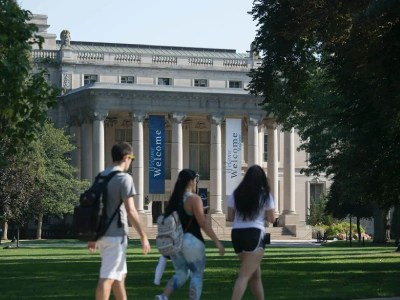
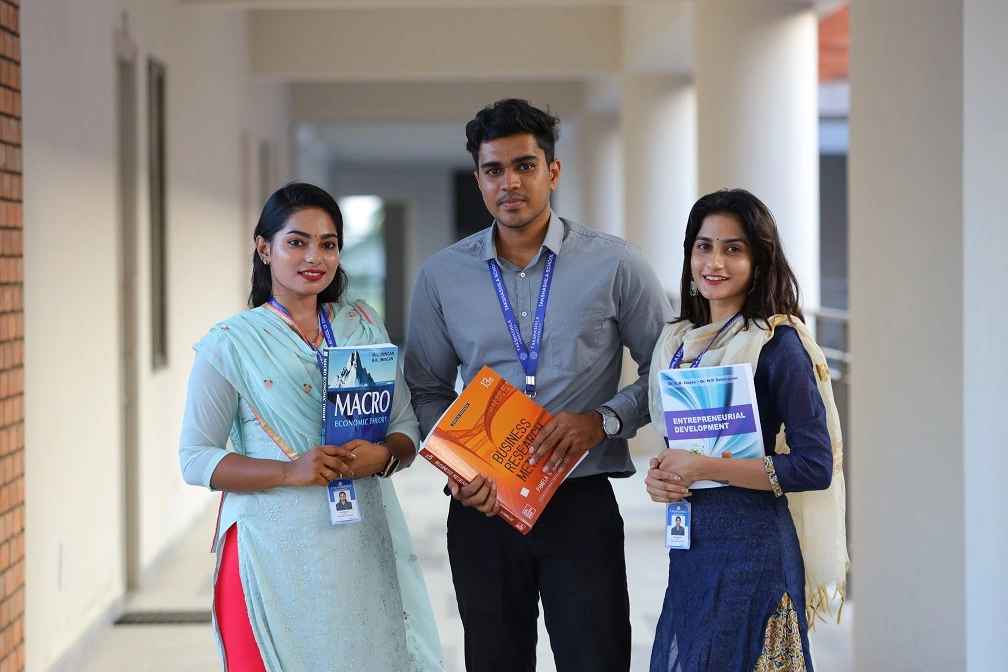
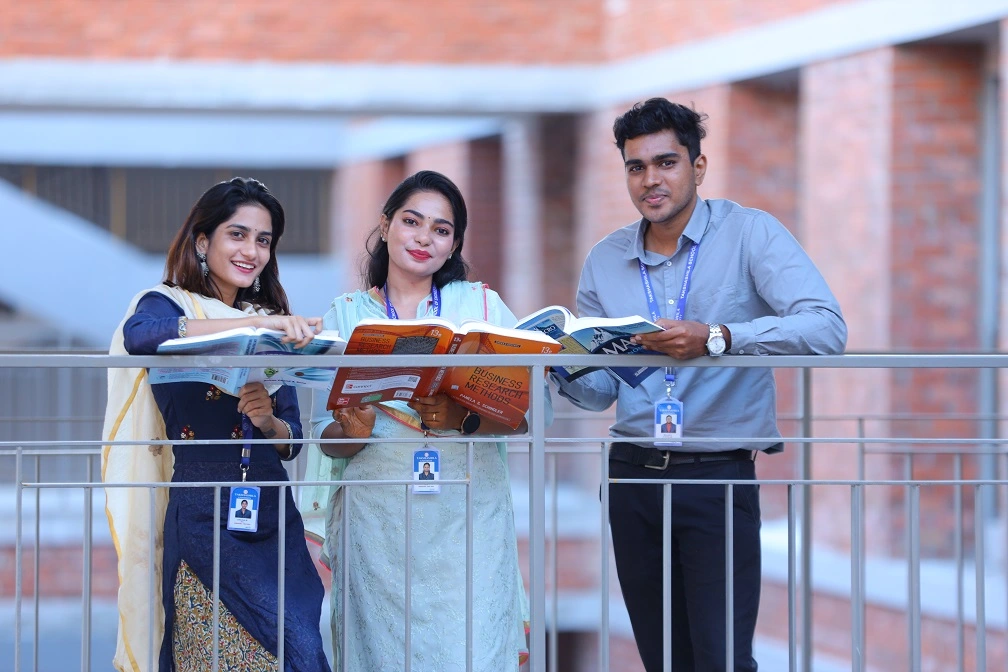
At Takshashila University, life as a Master of Social Work (MSW) student goes far beyond textbooks. The campus fosters a vibrant, inclusive environment where you’ll grow both personally and professionally through diverse experiences that complement your classroom learning.
What you can look forward to

Community Engagement
Take part in fieldwork, NGO collaborations, outreach programmes, and social impact projects that allow you to work with real communities and make a tangible difference.
Modern Learning Infrastructure
Benefit from well-equipped classrooms, seminar halls, and a resource-rich library that support both academic learning and social research.

Exposure to Real-World Challenges
Participate in workshops, case studies, and simulation-based learning to understand social issues from multiple perspectives and build practical intervention strategies.

Collaborative Student Culture
Join social work clubs, awareness campaigns, and university events that promote teamwork, leadership, and advocacy skills crucial for your career in social work.
Spread over 150 acres
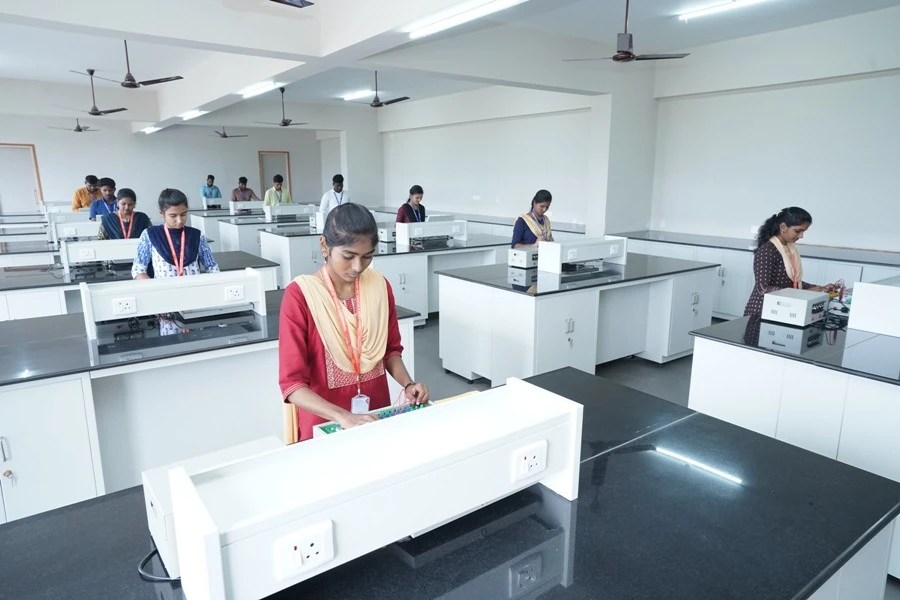
At Takshashila University, you will have ample opportunities to hone your skills in real-world healthcare settings, utilising state-of-the-art medical facilities and simulation labs on our 150-acre campus.






Become a Social Worker, Community Leader, or Welfare Professional Join Best Colleges for Social Work in Tamil Nadu Today
Frequently Asked Questions (FAQs)
- What is MSW Social Work Admission process in Tamil Nadu?
MSW Social Work Admission requires bachelor’s degree in any stream, merit-based selection through entrance exams or graduation marks. Colleges conduct merit-based counseling for MSW Social Work Admission in Tamil Nadu. - What is the MSW Social Work Fees structure in Tamil Nadu?
MSW Social Work Fees: Government colleges ₹18,000-₹35,000/year; Private colleges ₹1,20,000-₹3,50,000/year. Total 2-year MSW Social Work Fees: ₹36,000-₹70,000 (government) to ₹2.4-7 lakhs (private). - What is MSW Social Work Eligibility Criteria in Tamil Nadu?
MSW Social Work Eligibility Criteria: Bachelor’s degree pass in any stream. Minimum 45-50% aggregate marks. Merit-based selection for MSW Social Work Eligibility Criteria. - Are MSW Social Work Scholarships available in Tamil Nadu?
Yes. MSW Social Work Scholarships include government merit scholarships, SC/ST/OBC category scholarships, and education loans with 8-10% interest. - What is MSW Social Work Fee Structure payment options?
MSW Social Work Fee Structure offers annual payment, semester payment options. Education loans available for MSW Social Work Fee Structure covering full cost with 8-10% interest rates. - Which colleges have best Top MSW Social Work Colleges with Placement in Tamil Nadu?
Top MSW Social Work Colleges with Placement: University of Madras (82%+ placement), Pondicherry University (80% placement), Loyola Institute of Social Studies (85% placement) offer excellent social work placement. - What social worker and community leader roles can I pursue after MSW?
After MSW, pursue Clinical Social Worker, Community Development Worker, Child Welfare Specialist, Mental Health Social Worker, Program Manager, or Government Welfare Officer roles. - What is the average salary for social workers after MSW graduation?
MSW graduates earn ₹4-8 lakhs starting salary as social workers. With 5-7 years experience: ₹10-16 lakhs. Senior social leaders: ₹16-26+ lakhs annually. - Are internship opportunities available for MSW Social Work students during the program?
Yes. MSW internships with NGOs, government agencies, hospitals, mental health centers, and community organizations. Internship stipends: ₹3,000-₹6,000/month. - Can I pursue PhD or postgraduate degrees after MSW Social Work?
Yes. MSW graduates eligible to pursue PhD Social Work, PhD Community Development, and specialized research degrees for academic and research careers. - What entrance exams are required for MSW Social Work Admission in Tamil Nadu?
MSW Social Work typically requires merit-based selection. Some universities conduct entrance tests. Direct admission based on graduation marks for MSW Social Work Admission. - How does MSW Social Work benefit aspiring social workers and community leaders?
MSW provides social work practice training, community development expertise, welfare policy knowledge—essential for social workers in community and welfare roles. - What is the duration of MSW Social Work postgraduate program?
MSW spans 2 years (4 semesters) with classroom learning, field internships, community projects, case studies, and mentorship integrated throughout. - Can I pursue international social work opportunities after MSW?
Yes. MSW graduates secure positions with international NGOs, development organizations, and global social institutions. - What social work and community skills develop in MSW?
MSW develops: casework, community development, group work, social administration, research methodology—core social worker professional skills. - Are government social work positions available after MSW in Tamil Nadu?
Yes. Government positions available for MSW graduates in welfare departments, social services, child protection, and government agencies. - What is the future scope of MSW Social Work in Tamil Nadu?
Future scope for social workers: strong with expanding social welfare needs, community development focus, and social services growth. - How to pick the best MSW Social Work college in Tamil Nadu?
Pick best MSW Social Work college: check placement rates (75-85%), average salary (₹4-8 lakhs), field placement quality, faculty expertise, alumni success. - What are current industry trends in MSW Social Work for Tamil Nadu?
Industry Trends: mental health focus advancement, community development emphasis, digital social work integration, disability inclusion priority, social entrepreneurship growth. - Why choose MSW Social Work over other postgraduate degrees in Tamil Nadu?
Choose MSW: specialized social work training, NGO and government opportunities (75-85%), community career path, social expertise, social impact contribution, research advancement options.
SECTION 13: BOTTOM CTAs (UNLIMITED CHARACTERS)
Ready to Become a Social Worker, Community Leader, or Welfare Professional?
Join Best Colleges for Social Work in Tamil Nadu
[JOIN NOW & LAUNCH YOUR SOCIAL WORK CAREER]
or
[DOWNLOAD YOUR FREE MSW SOCIAL WORK CAREER & COLLEGE GUIDE]
Explore top-ranked best colleges for Social Work in Tamil Nadu with 75-85% placement rates, average starting salaries of ₹4-8 lakhs, and exceptional NGO and government social work career opportunities. Master casework, community development, welfare policy, and social administration at leading Tamil Nadu institutions offering field placements, community centers, and NGO and government agency partnerships for social work career advancement and community impact contribution.