
Short Summary
Due to the dearth of professionals specialising in imaging in India, the Scope of Bachelor of Medical Radiology and Imaging Technology as a field is on the rise in the country.
Radiographers find themselves at various places such as hospitals, clinics, diagnostic centres, and research institutes that offer increasingly better salaries owing to specialisation and proficiency.
Due to AI-based diagnostics and digital imaging, there is huge scope in terms of both present-day opportunities and growth prospects for the future, making it a future-proof field.
Introduction: Why the Scope of Bachelor of Medical Radiology and Imaging Technology Is Becoming One of the Most Promising Career
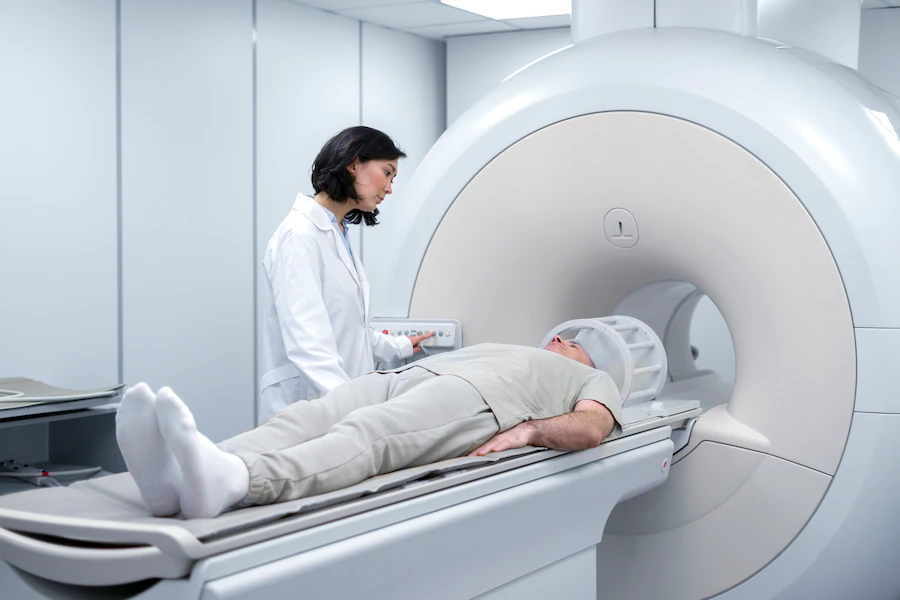
The Scope of Bachelor of Medical Radiology and Imaging Technology in India has never looked more promising for students choosing a career in diagnostic imaging. Every X-ray, MRI, and CT scan performed in a hospital today depends on trained radiographers, and India’s healthcare system is short on exactly these professionals.
Be it through an X-ray or an MRI, imaging plays a vital role in diagnosing modern health problems, and the professionals performing this operation are much sought-after in India.
There have been several changes in the scope of the radiology field as a career due to the rapid advancement of Indian healthcare infrastructure and a well-known lack of qualified imaging professionals in the country.
According to salary data, fresh MRI technologists earn approximately ₹1.8 lakh to ₹2.5 lakh per year, rising to ₹5.89 lakh for professionals with 5–9 years of experience, a jump of nearly 79%
If you’re exploring paramedical courses after Class 12, here’s why a Bachelor of Medical Radiology and Imaging Technology (BMRIT) could be the right fit and how to get started at Takshashila University.
A Sector Under Pressure, and That’s Good News for Graduates
India today finds itself at the receiving end of a well-known shortage of the radiology workforce, and it is this very deficiency which is driving the demand for BMRIT professionals.
On any given day in the country, thousands of X-ray, CT and MRI procedures are carried out in hospitals and diagnostic centres, and each one of them requires the presence of an imaging technologist and not a radiologist who would take care of the machinery and make sure that the process produces good-quality images.
As more and more multispeciality hospitals, trauma centres and diagnostic centres emerge in both metro cities and tier 2 & tier 3 cities, the need for professional radiologists is growing beyond just the traditional medical centres of India.
Career Paths That Extend Well Beyond the X-Ray Room
A BMRIT degree qualifies graduates for a wide spread of roles, each tied to a specific imaging modality or work setting:
- Radiology Technologist / Radiographer
The most common entry point, involving X-ray imaging across hospitals, trauma centres and diagnostic clinics.
- CT and MRI Technologists
Specialised roles that involve operating advanced cross-sectional and magnetic resonance imaging equipment, typically commanding higher pay due to the technical precision required.
- Sonographers
Specialists in ultrasound imaging, which is widely applied in pregnancy, heart ailments and other diagnostic purposes.
- Nuclear Medicine Technologists
A unique course covering aspects of radioactive tracers and complex scanning processes, involving radiation safety issues.
- Interventional Radiology Technologists
Help in minimally invasive procedures done in cath labs, an emerging field as hospitals provide more intervention facilities.
- Positions in Teleradiology/PACS Management
As imaging procedures become electronic in hospitals, jobs in digital image management and teleradiology reporting are increasing.
Apart from clinical opportunities, graduates can take up jobs as academic teachers, researchers in institutes like AIIMS/PGIMER, or further studies in postgraduate courses of medical physics/biomedical engineering/advanced imaging procedures.
What the Salary Trajectory Actually Looks Like
When it comes to the Scope of Bachelor of Medical Radiology and Imaging Technology , then the BMRIT salary structure boasts a steady upward trend with significant pay increases with regard to specialisation and experience.
However, fresh MRI technologists are expected to earn approximately ₹1.8 lakh to ₹2.5 lakh per year, which increases to ₹5.89 lakh per year for those who have 5-9 years of experience, thus showing an increase of about 79 per cent from the entry-level salary.
On the other hand, the monthly salary for a CT scan technologist stands at ₹19,300 and is slightly higher than that of an ordinary X-ray technician that stands at ₹2.5 lakh to ₹3 lakh annually.
However, at the higher level, the salary package for specialised MRI and CT technologists in the private corporate hospital chain in metros could go up to ₹6 lakh to ₹10 lakh annually, whereas the same technologists.
If working abroad in countries such as the Middle East, UK and Australia could earn a package of ₹12 lakh to ₹25 lakh.
Why Specialisation Is the Real Differentiator
When looking at the wider picture within radiology, specialisation is the key that determines the difference between a small salary and a lucrative one.
The acquisition of certifications for complicated sequences for MRI, neuroimaging, or cardiac MRI or a postgraduate course in medical physics or advanced imaging techniques will contribute greatly to an increased salary.
Individuals who decide to specialise in CT, MRI, nuclear medicine, or interventional radiology right after college will find themselves earning on the upper side of the pay scale much faster than non-specialised ones, while they will also have more chances to join prominent diagnostic companies that favour degree graduates over diploma holders.
Where the Future of This Field Is Headed
Two convergent trends will play a crucial role in determining the future of radiology and imaging technology: increasing demand for diagnostics and technological development.
With an increased focus on early diagnostics in routine medicine, especially since 2020, there has been a considerable increase in the use of CT, MRI and preventive diagnostics, and allied healthcare occupations in diagnostics are among the fastest-growing segments of the health workforce in India.
In addition, the integration of AI diagnostics, automated image segmentation and digital workflow into imaging departments means that future BMRIT students will have to be proficient not only in positioning patients but also in digital health informatics.
From a practical perspective, it would be fair to say that for any student looking at his/her career prospects, radiology and imaging technology provide long-lasting opportunities.
Training the Next Generation of Imaging Professionals at Takshashila University
The Scope of Bachelor of Medical Radiology and Imaging Technology at Takshashila University is founded on the understanding that confidence in the practice of medical imaging is developed from practical experience rather than textbook knowledge alone.
Students get trained in advanced imaging machines by skilled teaching staff, thereby becoming accustomed to the procedures of patient positioning, digital imaging, and other procedures related to each type of machine before even entering the internship year.
To see the campus, labs, and student life up close, follow Takshashila University on Instagram or explore the Takshashila University homepage for full programme details. let a student know which is best for them BSc Bachelor of Medical Radiology and Imaging Technology vs BSc Nursing
To wrap up: A Career Built on Precision, Purpose and Steady Growth
Today, radiology in India has expanded to include not just the X-ray suite but CT, MRI, nuclear medicine, interventional radiology, and digital imaging technologies, all of which have been facilitated by a healthcare industry in desperate need for skilled professionals.
To students looking to embark on a career that combines technical acumen with true impact, there is no better place than BMRIT where immediate employability and future career prospects go hand in hand. It is safe to say that opting for a university that values hands-on training and cutting-edge technology could make a world of a difference.
Frequently Asked Questions about Scope of Bachelor of Medical Radiology and Imaging Technology
Q1. What is the Scope of Bachelor of Medical Radiology and Imaging Technology as a profession in India?
There is a high Scope of Bachelor of Medical Radiology and Imaging Technology involving X-ray, CT, MRI, ultrasound and nuclear imaging due to the rising demand because of the constant shortfall of radiologists in India.
Q2. What is the difference between a BMRIT professional and a radiologist?
BMRIT professionals are those who work on imaging devices and generate images, while the radiologists are physicians who will analyse the images and diagnose illnesses after obtaining an MBBS degree and specialising further.
Q3. What is the approximate salary of a BMRIT graduate?
Salaries offered at entry level will be around ₹2.5 lakh to ₹4 lakh a year, depending on the specialisation and location.
Q4. Which imaging specialisation pays the most?
Those doing MRI, CT scans and interventional radiography will earn more compared to other specialisations.
Q5. Can graduates of BMRIT work in government hospitals?
Yes, since government hospitals, ESIC, CGHS, and NHM recruit imaging technologists in state PSC recruitment tests or specific recruitment tests for paramedical jobs.
Q6. Are there any international career opportunities for BMRIT graduates?
Yes, since countries such as the UK, Australia, and the Middle Eastern countries actively hire radiology professionals from India, usually offering better pay.
Q7. Which higher studies can BMRIT graduates opt for?
The graduates may go for specialisation by pursuing an M.Sc. in medical physics/biomedical engineering/advanced imaging techniques.
Q8. Is there a growth of the demand for radiology specialists?
Indeed, increasing application of diagnostics and the recognised shortage of trained radiologists result in a constant increase in demand for radiology specialists in India.
Q9. How does technology affect radiology?
There are AI-based diagnostics systems and automatic segmentation systems becoming common in the imaging facilities, and, therefore, new graduates have to be digitally literate.
Q10. Why should one select Takshashila University as their institution for a BMRIT programme?
At Takshashila University, there is practical experience in clinical practice, modern equipment, and curriculum that is adapted to digital diagnostics.


One Response