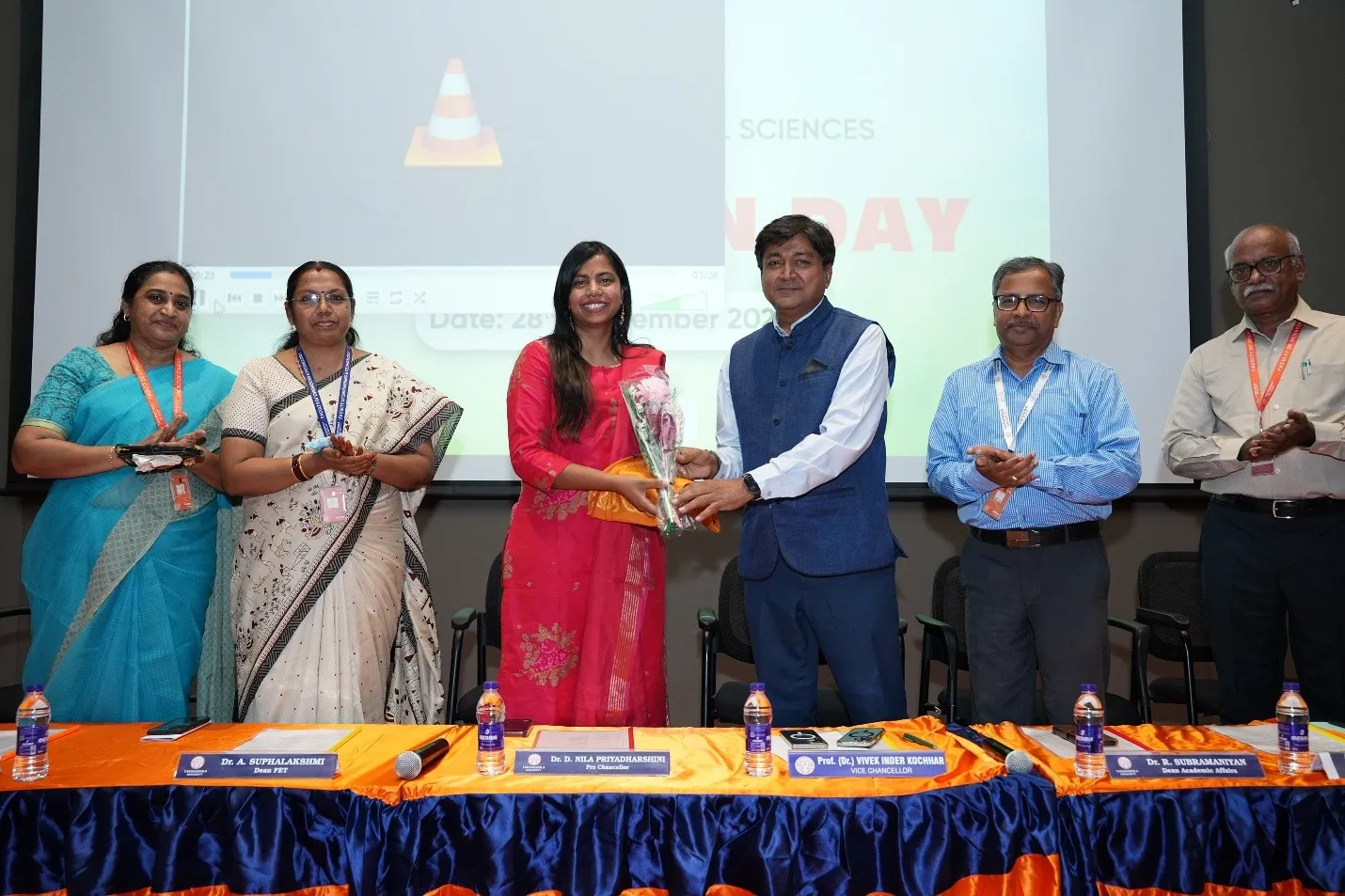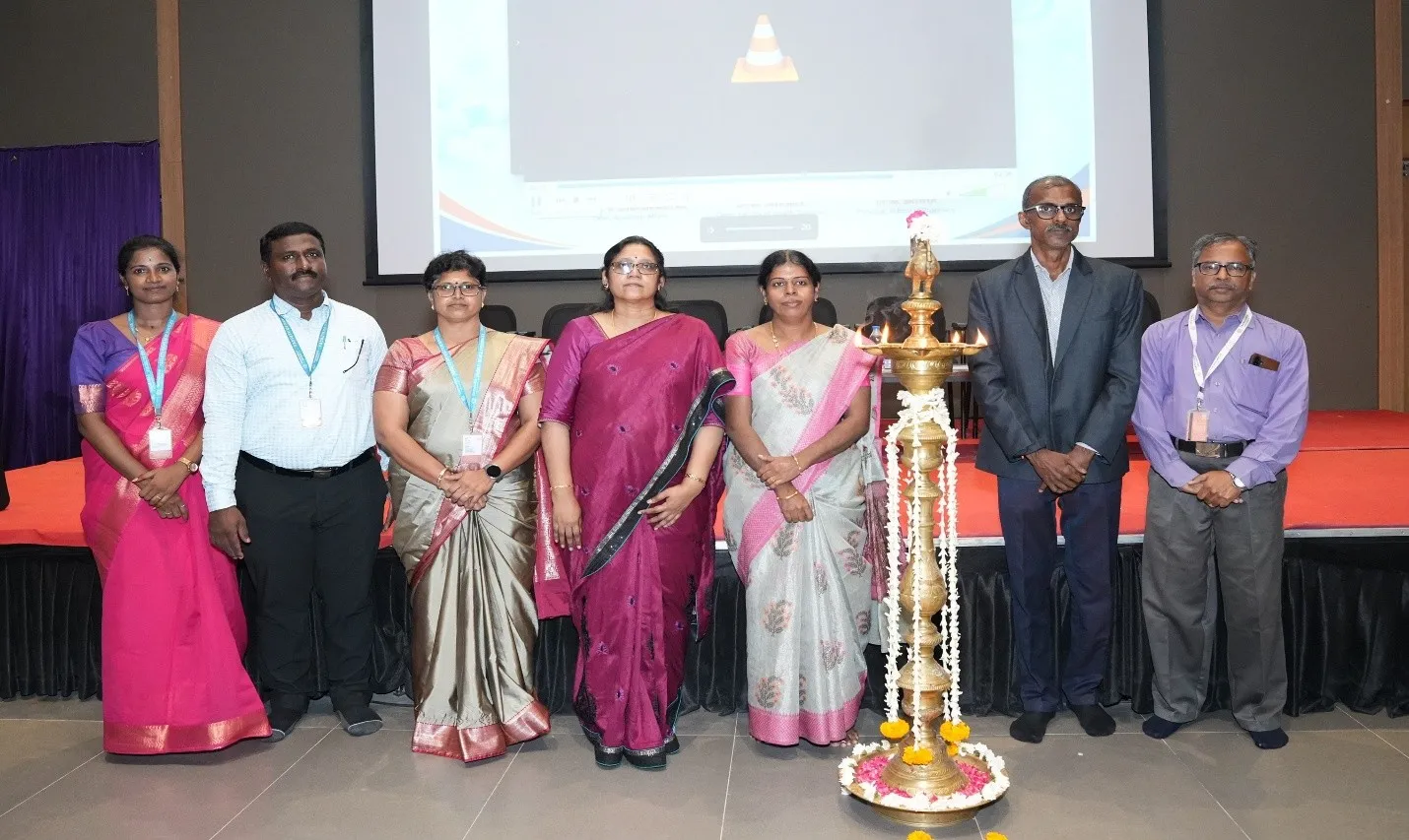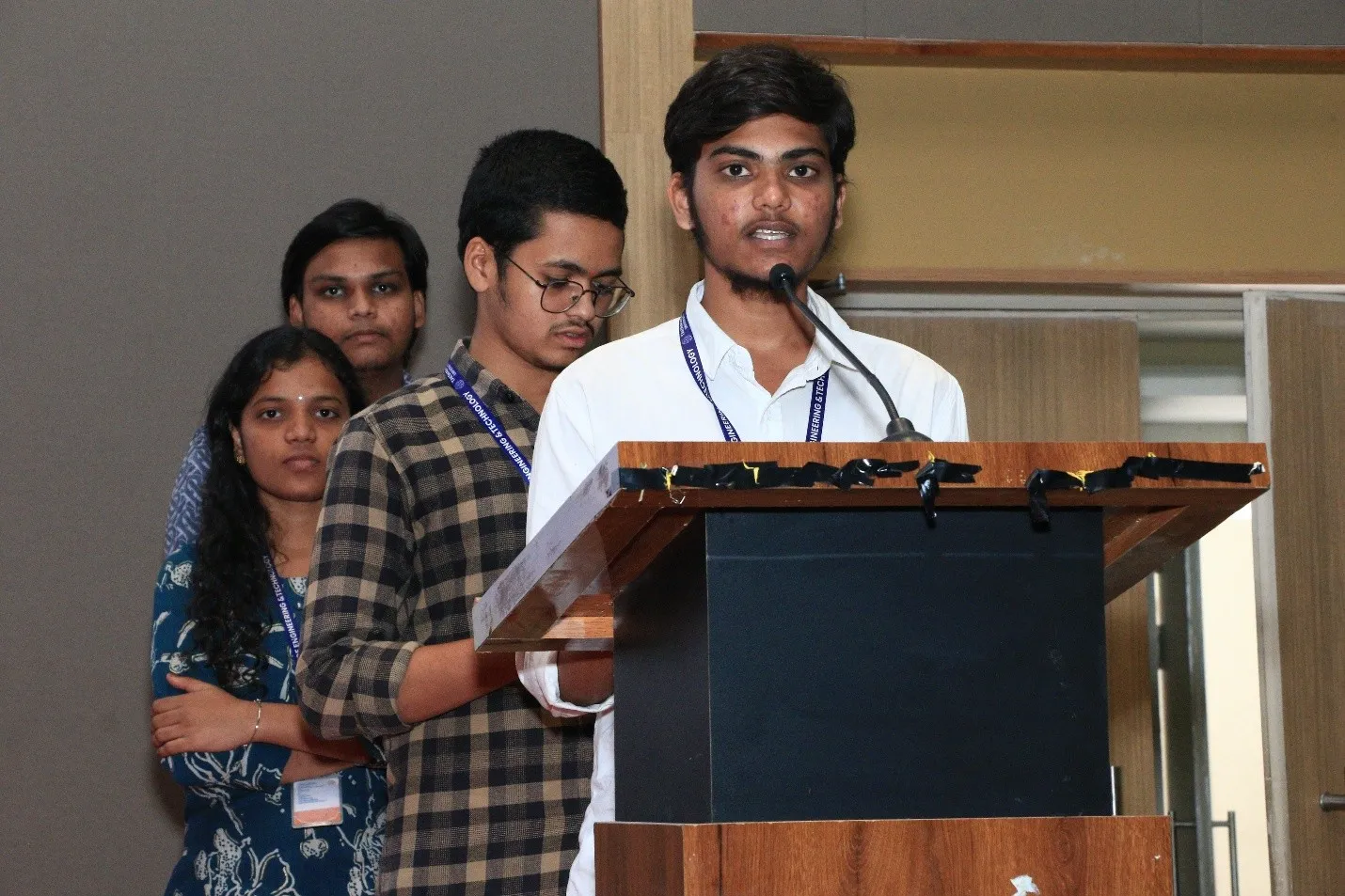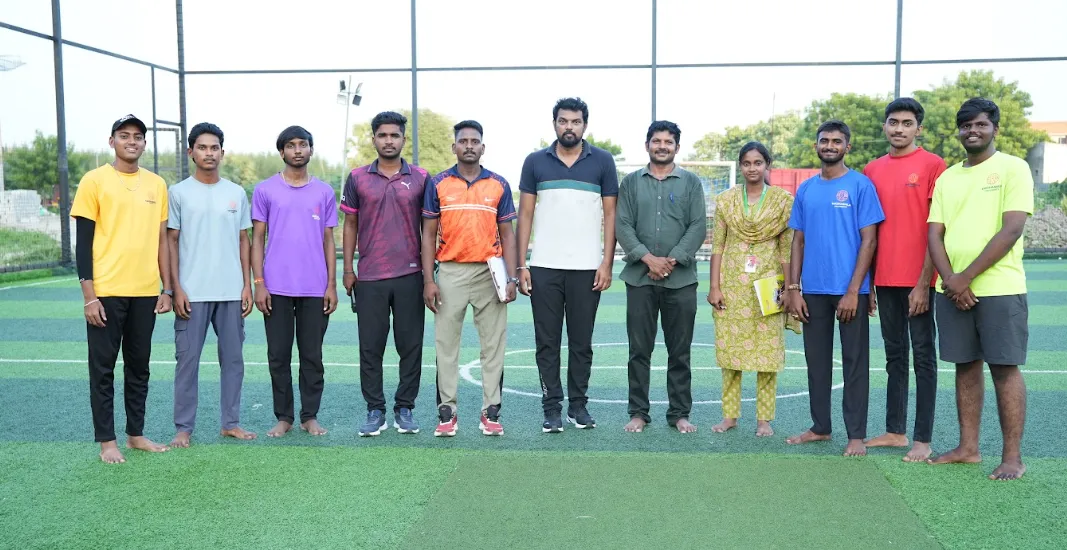

World Soil Day Event – A World Soil Day programme organised in Nolambur village by the Tamil Nadu State Agricultural Department drew renewed attention to soil health, conservation, and sustainable farming practices for the local farming community.
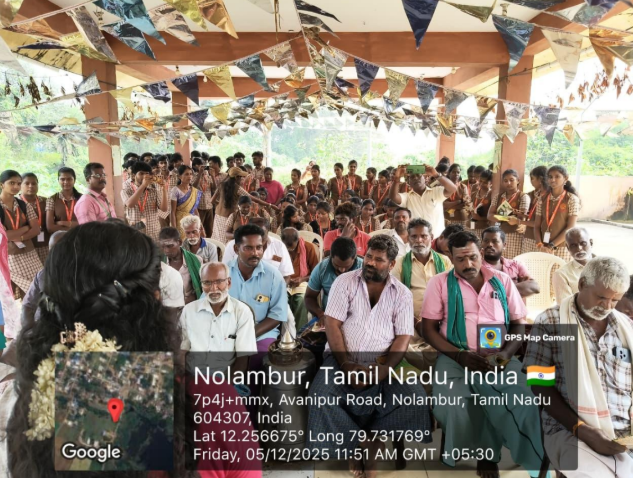
Our School of Agricultural Science participated in the initiative, with 85 students and two faculty members in attendance. The programme doubled as an awareness event for farmers and a field-based learning experience for our students, who were exposed to current issues in soil management and sustainable agriculture. Around 65 farmers from Nolambur and neighbouring villages participated in the event.
World Soil Day is observed globally on 5 December each year to underline the critical role of soil in sustaining life on Earth. Officials at the Nolambur programme focused on encouraging farmers to adopt practices that protect soil resources while maintaining crop productivity. Explore our IG id of takshashila
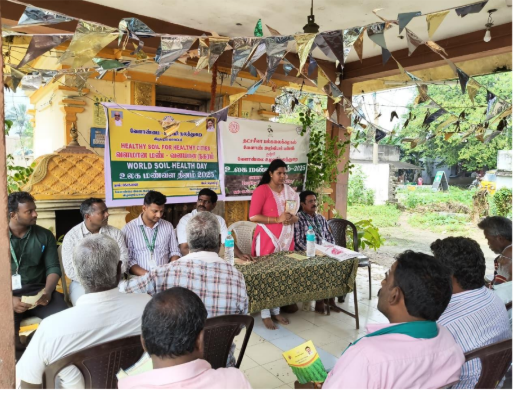
Officer Stresses Soil Testing And Climate-Smart Practices
Addressing the gathering, Agricultural Officer Ms. Kiruthika delivered a detailed session on the importance of soil health for long-term agricultural sustainability. She drew attention to key concerns such as declining soil fertility, inappropriate use of fertiliser, and the impact of climate change on crop performance.
Her address emphasised the need to move towards more scientific and sustainable soil-management practices. Farmers were urged to:
- Undertake regular soil testing to understand the nutrient status of their fields.
- Follow balanced nutrient management, taking into account major, secondary and micronutrients.
- Reduce overdependence on chemical fertilisers by gradually incorporating organic and eco-friendly inputs, including farmyard manure, compost, green manures and biofertilisers.
Using real-life examples, Ms. Kiruthika explained how climate variability is already affecting yields and soil moisture, and encouraged farmers to adopt climate-smart agriculture. She outlined practical strategies to improve soil quality, enhance crop yields and optimise input use, making her talk relevant to both farmers and students.
Key Components Of The Nolambur Programme
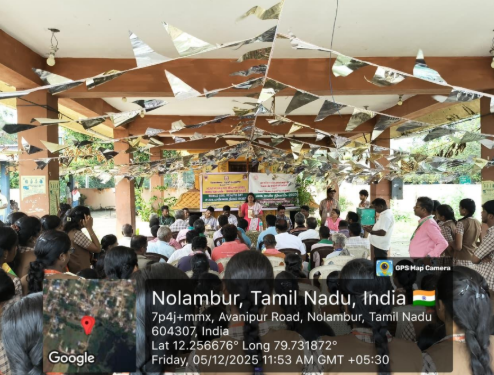
The event featured a series of awareness and training activities aimed at strengthening soil literacy and promoting better farm practices. The main components included:
- Participation of local farmers: Around 65 farmers from Nolambur and nearby villages attended the programme. Details of 28 farmers were collected to build a database for future technical support and follow-up.
- Soil health awareness session: Farmers were introduced to the concept of soil quality and measures for improvement, with explanations of soil structure, organic matter, and nutrient balance.
- Training on sustainable farming practices: Officers from the Tamil Nadu State Agricultural Department conducted sessions on cropping practices that support soil health and reduce degradation.
- Interactive session with farmers: Participants were given the opportunity to raise field-level challenges and clarify doubts about crop management and soil conditions. The discussions helped align scientific recommendations with the realities of local farming.
- Guidance on soil conservation: Techniques to prevent soil erosion and loss of topsoil were discussed, with an emphasis on conservation-oriented practices that protect the productive capacity of the land.
- Promotion of organic farming: The long-term benefits of organic and low-chemical approaches—for both the environment and crop health—were highlighted as a pathway towards more sustainable agriculture.
We designed the format to move beyond lectures and create a space for dialogue, encouraging farmers to share their experiences and constraints so that the advice offered remained practical and relevant.
Tree Saplings Distributed Under Green Initiative
As part of our contribution to the World Soil Day observance, we distributed 150 tree saplings to the participating farmers. This initiative formed a key element of our green drive and reinforced the link between tree cover and soil protection.
Our representatives explained that trees can play a significant role in:
- Reducing soil erosion by stabilising the soil with their root systems.
- Improving soil structure and organic content through leaf litter and biomass.
- Assisting in moisture retention, particularly in dry or rainfed conditions.
- Enhancing the overall resilience of farm ecosystems over the long term.
Farmers were encouraged to plant the saplings along field boundaries, bunds or other suitable locations, and to view tree planting as part of a broader strategy for soil conservation and environmental stewardship.
Practical Exposure For Agricultural Students
For our students in the School of Agricultural Science, the World Soil Day event provided a practical extension of classroom learning. The visit enabled them to observe how technical information on soil management is communicated to farmers and how government-led extension activities are organised at the village level.
The interaction offered insights into the day-to-day challenges faced by small and marginal farmers, including input costs, changing weather patterns and the need to balance productivity with resource conservation.
We believe that such field-based exposure plays a crucial role in preparing our students to engage more effectively with farming communities in their future careers, whether as agronomists, extension professionals or researchers.
Step Towards Sustainable Soil Stewardship
We see the Nolambur World Soil Day celebration as a meaningful step towards encouraging better soil-management practices and fostering environmental responsibility in the region.
With the participation of 65 farmers, the involvement of our students and faculty, and the expert contribution of Agricultural Officer Ms. Kiruthika, the programme helped reinforce the message that healthy soil is fundamental to sustainable agriculture and food security.
We recognise that continued outreach programmes, along with follow-up support to the farmers enrolled in the database, will be important in translating the day’s discussions into lasting changes on the ground. Going forward, we plan to remain engaged through similar collaborative initiatives aimed at promoting soil health, sustainable farming and environmental conservation in Nolambur and surrounding villages.
Why Choosing Agriculture Matters In A World Of Engineering And IT
Today, many students automatically gravitate towards engineering, IT and computer science because they are seen as the obvious pathways to “modern” careers. We believe agriculture deserves to stand right alongside them; not as a fallback option, but as a frontline, future-facing field.
Agriculture is where some of the biggest questions of our time are being asked and answered:
- Who will feed a growing population?
- How will we farm with less water, less land and a changing climate?
- How can technology make farming more profitable, predictable and sustainable?
Our agriculture graduates are trained to work at the intersection of science, technology and society. A student who chooses agriculture today is not limited to working only on farms; they can build careers in:
- Agri-tech companies, start-ups and precision-farming ventures
- Seed, fertiliser and crop protection industries
- Soil and water conservation projects
- Banking, rural credit and agri-finance
- Government departments, research institutions and NGOs
- Entrepreneurship in farming, input services or agri-business
Most importantly, a career in agriculture allows young people to see the impact of their work directly in the lives of farmers and communities. At Takshashila University, we are committed to shaping socially responsible, future-ready graduates through rigorous academics and real-world learning. We bring together diverse disciplines – from the School of Agricultural Science and allied health to engineering, management and the arts – on a collaborative, student-centric campus. Our focus on innovation, community outreach and experiential education ensures that what students learn in classrooms is continually tested in the field. Through initiatives like the World Soil Day programme, we reaffirm our promise to contribute meaningfully to society, the environment and sustainable development.