
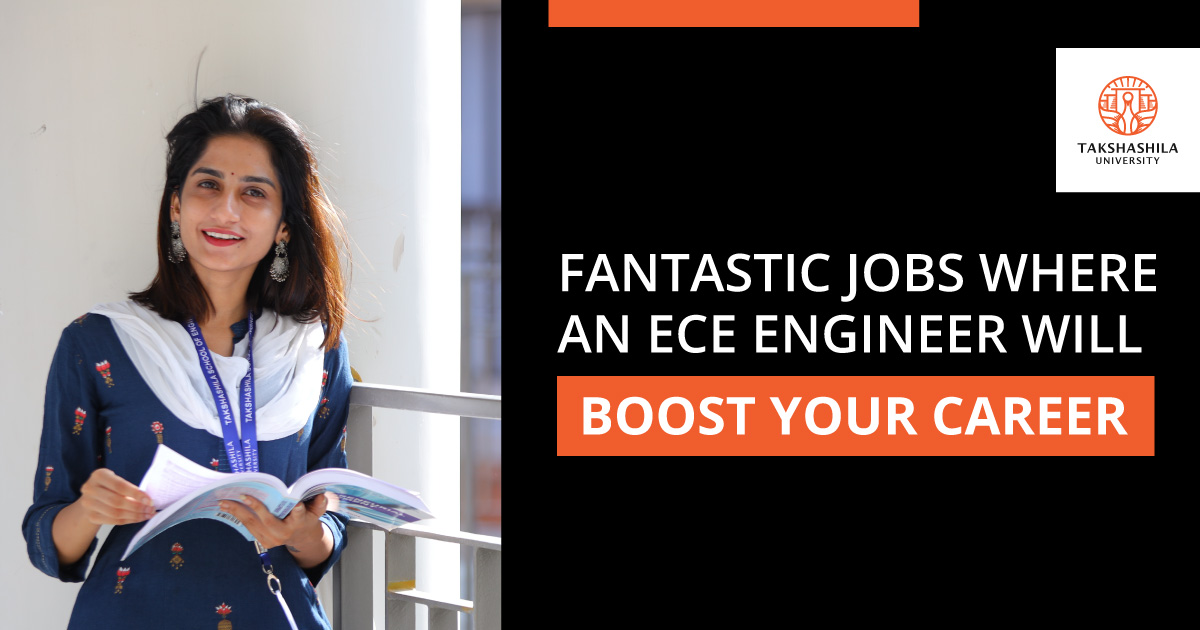
An ECE engineer plays a vital role in shaping the digital world, from powering the future to connecting innovation. Careers after ECE (Electronics and Communication Engineering) are immense and can ignite your passion and unlock vast opportunities.
In this blog, let’s delve into Electronics and Communication Engineering, discover its top 10 careers after ECE, and understand its potential. Let’s get started and electrify your career paths!
Overview Of ECE Engineering
Electronics and Communication Engineering (ECE) is a dynamic field that plays a significant role in today’s technological advancements, and it is a 4-year course. It focuses on designing, developing and ensuring the working of electronic devices, communication systems, and related technologies.
ECE addresses challenges in electronics, telecommunications, signal processing and more by combining the principles of Physics, Mathematics, Computer Science and Engineering. It offers diverse opportunities across various industries such as telecommunications, automotive, aerospace, healthcare, etc.
At Takshashila University, you can now enroll on the B.Tech ECE course and shape your future, uncovering the power of electronics!
The Importance of ECE Engineers In The Job Market!
With the technological advancements, the demand for fast, reliable and seamless communication, and the need for user-friendly consumer electronic devices and robots to enhance productivity and efficiency in various sectors, ECE engineers are considered assets in today’s technology-driven world.
They are crucial in the job market since many industries rely on their ability to innovate, solve complex problems, and contribute to technological advancements, making them the most sought-after by employers. The demand for ECE engineers will only grow since the technology continues to evolve.
Ten Fantastic Jobs For ECE Engineers
Here are some demanding careers after ECE – Electronics and Communication Engineering for your reference.
10. Telecommunications Engineer
| Role Description | Skills | Salary Prospects |
| Telecommunications Engineer designs, develops, implements and manages telecommunication systems and networks. They ensure efficient and reliable communication infrastructure by working with various technologies, such as voice, data, and video communication. | 1. Troubleshooting And Problem-Solving 2. Analytical And Technical Skills 3. Project Management 4. Network Security 5. Knowledge Of Communication Technologies 6. Network Design And Implementation | INR 3.5 to 6 lakhs per annum for entry-level aspirants. |

9. Electronics Design Engineer
| Role Description | Skills | Salary Prospects |
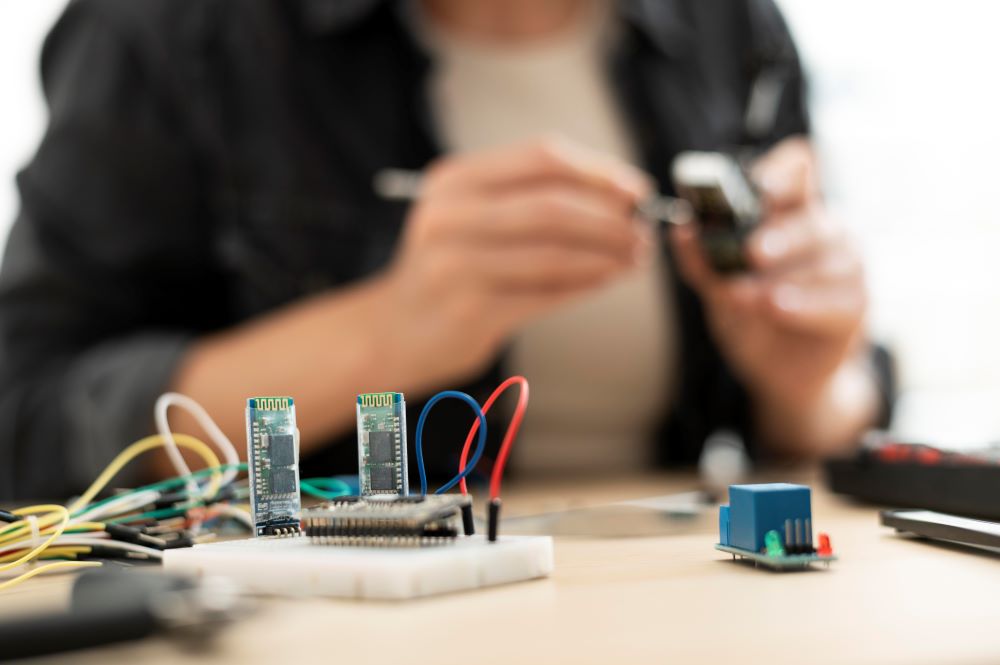
| Electronics Design Engineers design and develop electronic circuits, systems and components. They work on creating electronic devices, such as microprocessors, integrated circuits, printed circuit boards (PCBs), etc. | 1. CAD Tools 2. Programming Languages 3. Problem-Solving And Critical Thinking 4. Circuit Analysis And Troubleshooting 5. Knowledge Of Electric Principles 6. Communication And Teamwork Skills | INR 3 to 6 lakhs per annum for entry-level aspirants. |
8. Software Analyst
| Role Description | Skills | Salary Prospects |
| Software Analysts analyse software systems, identify requirements and help design solutions to meet business needs. To ensure the software projects are well-defined, well-documented and aligned with organisational objectives, they work closely with stakeholders, clients, business analysts and developers. | 1. Analytical Skills 2. Communication Skills 3. Technical Knowledge 4. Problem-Solving Abilities 5. Domain Knowledge | INR 3.5 to 6 lakhs per annum for entry-level aspirants. |

7. Signal Processing Engineer
| Role Description | Skills | Salary Prospects |
| Signal Processing Engineers specialise in analysing, manipulating and interpreting signals to extract meaningful information. They work with various signals, such as audio, video, and data signals and process and analyse them by applying mathematical and computational techniques. | 1. DSP Techniques 2. Programming Skills 3. Signal Analysis And Interpretation 4. Communication And Collaboration 5. Solid Mathematical Foundation | INR 3.5 to 6 lakhs per annum for entry-level aspirants. |

6. Field Test Engineer
| Role Description | Skills | Salary Prospects |
| Field Test Engineers conduct tests and evaluations of products or systems outside a controlled laboratory environment and in real-world conditions. They verify equipment, systems or software’s performance, functionality and reliability. | 1. Technical Knowledge 2. Test Methodologies 3. Troubleshooting And Problem-Solving 4. Communication Skills 5. Adaptability And Flexibility | INR 3 to 6 lakhs per annum for entry-level aspirants. |

5. Renewable Energy Engineer
| Role Description | Skills | Salary Prospects |
| Renewable Energy Engineers design, develop and implement renewable energy systems and technologies. They create sustainable energy solutions that reduce reliance on fossil fuels, thus reducing environmental impact. | 1. Technical Knowledge 2. Engineering Expertise 3. Project Management 4. Problem-solving Skills 5. Communication and Collaboration 6. Regulatory Compliance | INR 3 to 6 lakhs per annum for entry-level aspirants. |

4. Hardware Engineer
| Role Description | Skills | Salary Prospects |
| Hardware Engineers design, develop, and test computer hardware components and systems. They focus on computer systems, embedded systems and electronic devices and involve in various aspects of hardware development, including circuit design, PCB layout, prototyping, testing and troubleshooting. | 1. Digital Design 2. Analog Design 3. PCB Design 4. Testing And Debugging 5. Hardware Description Languages 6. Communication and Collaboration Skills | INR 3 to 6 lakhs per annum for entry-level aspirants. |

3. Embedded Systems Engineer
| Role Description | Skills | Salary Prospects |
| Embedded Systems Engineers specialise in designing, developing and testing embedded systems. | 1. Programming Skills 2. Knowledge of Microprocessors/Microcontroller 3. Real-time Systems 4. Debugging and Testing 5. Communication Protocols | INR 3 to 6 lakhs per annum for entry-level aspirants. |

2. Robotics Engineer
| Role Description | Skills | Salary Prospects |
| Robotics engineers design, develop and maintain robotic systems. They create intelligent machines by combining the principles of mechanical engineering, electrical engineering, computer science and artificial intelligence. | 1. Programming Skills 2. Mechanical Design 3. Sensor Integration 4. Problem-solving 5. Communication and Collaboration 6. Artificial Intelligence | INR 4 to 7 lakhs per annum for entry-level aspirants. |

1. Wireless Communications Engineer
| Role Description | Skills | Salary Prospects |
| Wireless Communication Engineers design, implement and maintain wireless communication systems. They ensure the efficiency and reliability of wireless connectivity for various applications and industries. They work with technologies such as cellular networks, Wi-Fi, Bluetooth, satellite communications, etc. | 1. Technical Knowledge 2. Network Design and Optimisation 3. Troubleshooting and Problem-solving 4. Programming and Software Skills 5. Communication and Collaboration | INR 3 to 6 lakhs per annum for entry-level aspirants |

Higher Studies After ECE!
After completing BTech ECE, you can pursue higher education instead of joining a company for work. In PG degrees, you can learn the advanced concepts that help land a job with a better pay package or your dream organisation, thus assuring job security.
Some options for pursuing higher education after BTech ECE are MTech, MS and MBA. At Takshashila University, you can start with your UG degree, study further and do a doctorate too! It is a one-stoppage for all your career aspirations.
Why should you do a PG degree after BTech ECE?
- Open the door to senior-level positions.
- Gain in-depth knowledge and expertise in the ECE field
- Build a vast professional network
- Global opportunities
- Better salary
- Career Advantage
- Job security
Why Choose Takshashila University?
Takshashila University is one of the premium universities in Tamil Nadu with several programmes in Engineering, allied Health Science, Physiotherapy, Arts & Science, Hotel Management and Agriculture.
With 64+ degree programs, 10+ industry tie-ups and 100% campus placements, Takshahsila University stands tall in the 150+ acres of land. It sails with a motto, ‘Creating the leaders of tomorrow’. It offers scholarships based on academics and sports in all the courses and quality education with a hands-on approach.
It has more than 10 BTech programmes, and by picking up a BTech ECE course at Takshashila University, you shall discover new opportunities for professional growth since it offers promising career prospects.
Conclusion
If you have a passion for technology and problem-solving ability, you can take a BTech ECE course and benefit from it. The demand for ECE engineers has increased since they are vital in enhancing our daily lives.
ECE offers a range of fantastic job opportunities that boost your career. If ECE engineers leverage their expertise in electronics, communication systems, and related technologies, they can excel in diverse sectors. We hope the careers after ECE – Electronics and Communication Engineering discussed in this blog gave you a glimpse into the opportunities available to ECE engineers.
FAQs
1). What are the options after ECE?
ECE graduates can study further (MTech, MBA or MS) to boost their job opportunities, work in different roles in various industries or organisations, and explore their new venture as an entrepreneur by establishing a start-up.
2). Which specialisation is best in ECE for the future?
Several specialisations hold promising prospects in the ECE field. Internet of Things (IoT), Artificial Intelligence (AI), Machine Learning (ML), Embedded Systems, Wireless Communications and Networks, etc., are some specialisations with significant growth and demand in the future.
3). Is ECE a challenging course?
Since ECE requires a solid foundation in mathematics, physics and analytics and covers various subjects from electrics and communication systems to signal processing and microprocessors, it is considered a challenging course.
4). Does ECE requires coding?
Though ECE primarily focuses on designing, analysing and implementing electronic circuits and communication systems, it requires coding as part of the curriculum and in practical applications. ECE students are introduced to programming languages such as C, C++ or Python.
5). Is ECE in high demand?
With the rapid advancements in electronic devices and communication systems, ECE is in high demand in various industries, including aerospace, defence, healthcare, automotive, and more.


4 Responses
Your article helped me a lot, is there any more related content? Thanks!
Hi,
We’re glad our article was helpful! You can explore our recent blogs for more related content — we regularly share tips and insights to help students and professionals grow.
Warm regards,
Team Takshashila University
Your point of view caught my eye and was very interesting. Thanks. I have a question for you.
Hi,
Thank you so much for your kind words! I’m really glad the article gave you hope.
Of course, I’d be happy to help — what’s your question? Feel free to share the details, and I’ll do my best to guide you.
Warm regards,
Team Takshashila University