Direct Short Answer / Highlights
The common query among aspiring students is whether a BSc in Radiology requires NEET or other entrance exams. The answer is largely no for most private and government colleges, though a few state or university-specific entrance exams may be required. Admission usually depends on 10+2 scores, which include Physics, Chemistry and Biology.
Introduction
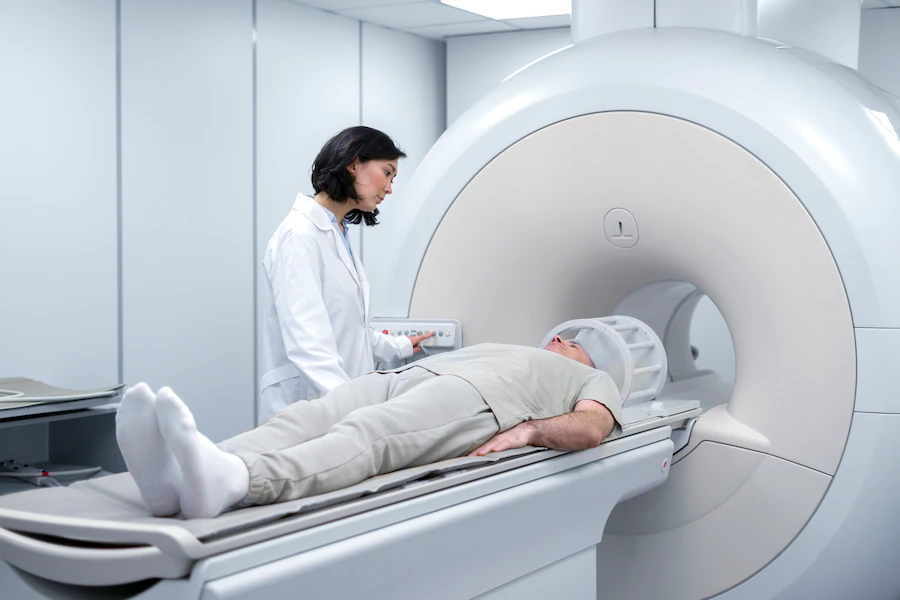
The BSc Radiology programme, which people know as the Bachelor of Science in Radiography or Radiological Technology, offers students who want to study medical imaging and diagnostic technology and patient care their preferred undergraduate degree. Many students planning their higher education ask, “Does BSc Radiology require NEET or other entrance exams?”
Academic path planning for radiology students requires them to comprehend both eligibility criteria and entrance requirements. BSc Radiology admissions use 10+2 marks as their main requirement because universities require students to pass these exams, except for specific institutions that conduct their own entrance assessments. Also Check out Careers in Healthcare Without Becoming a Doctor
Understanding BSc Radiology
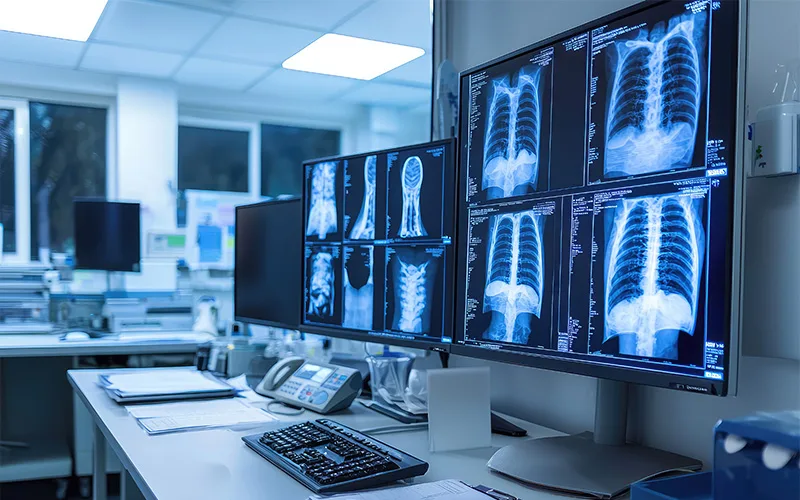
Definition: The BSc Radiology undergraduate programme teaches students how to perform diagnostic imaging procedures, which include X-rays, CT scans, MRI, ultrasound and nuclear medicine. The programme teaches students theoretical knowledge about anatomy and physiology, physics and pathology, which they use to learn how to operate imaging equipment.
Duration & Eligibility: The course takes three to four years for completion. The students need to complete 10+2 education, which includes Physics, Chemistry and Biology. Some colleges may require English as a compulsory subject.
Core Skills Developed:
- Expertise in medical imaging and diagnostic techniques
- Patient handling and communication
- Radiation safety and ethical practices
- Image interpretation and reporting
The programme provides graduates with the required skills to establish their professional careers in hospitals and diagnostic centres, research labs and advanced studies for radiology and imaging technology.
Does BSc Radiology Need NEET?
For most BSc Radiology programmes, NEET is not mandatory. NEET is mainly aimed at the entrance into medical programmes, for instance, those meant for MBBS, BDS, and other medical students, but not for allied health care sectors.
1. Admission Based on 10+2 Marks
- Most colleges consider Physics, Chemistry, and Biology scores.
- Based on the aggregate marks, merit lists are made.
- Private colleges may have management quotas or direct admissions.
2. University or State-Level Entrance Exams
Entrance exams for paramedical courses and allied health programmes exist at certain universities and state boards to assess candidates for their BSc Radiology programme. The Delhi University Entrance Test assesses paramedical programmes, while the Maharashtra CET evaluates paramedical courses, and the Karnataka CET tests allied health programmes. Students must check their eligibility requirements, test formats and admission requirements through the official websites of each university because different universities have different requirements.
3. AICTE or UGC Guidelines
The All India Council for Technical Education (AICTE) and University Grants Commission (UGC) both recognise BSc Radiology programmes, which exist within their accreditation standards. The regulatory bodies establish framework guidelines, yet they do not require NEET as a requirement for admission to radiology programmes.
Advantages of BSc Radiology Without NEET
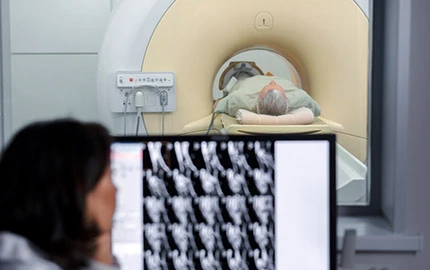
- Wider Accessibility: Students who did not appear for NEET can still pursue a career in medical imaging.
- Early Planning: One can get admission as soon as 10+2 is passed, meaning they don’t have to wait till the NEET results are out.
- Specialised Focus: Instead, students go for bombarding their patients with harmful rays from radiation and other devices.
- Flexibility in College Choice: Private universities and state universities, together with university-affiliated colleges, provide direct admission pathways and entrance examinations which assess radiology candidates.
Alternative Entrance Exams for BSc Radiology
Even though NEET is generally not required, students should be aware of other entrance exams that some institutions may use:
| Exam Name | Region/University | Purpose |
| DUET (Delhi University Entrance Test) | Delhi University | Admission to paramedical and radiology programs |
| MH CET (Maharashtra Common Entrance Test) | Maharashtra | Admission to allied healthcare courses, including BSc Radiology |
| Karnataka CET | Karnataka | State-level entrance for paramedical programs |
| JIPMER Entrance Exam | Puducherry | Limited BSc Radiology seats under the paramedical category |
Note: The exams assess student performance through testing methods which evaluate their understanding of Physics, Chemistry, Biology, and logical reasoning abilities without relying on the NEET medical aptitude assessment.
Admission Process for BSc Radiology
The BSc Radiology admission process starts with an eligibility assessment, which verifies that candidates have completed 10+2 educational requirements, together with their mandatory university criteria. The entrance exam allows students to apply, while universities have the option to select candidates based on their academic performance with an aggregate marks system as an alternative method of selection. After selection, document verification is conducted, including 10+2 mark sheets, transfer or migration certificates, and identity proof. Eligible candidates participate in counselling or seat allotment rounds, confirm admission by paying fees, and finally begin classes usually in July or August, with both theoretical and practical training from the outset.
International Perspective: BSc Radiology Admissions
Abroad, NEET requirements do not apply to BSc Radiology programmes because international universities base their admissions on high school students’ Physics, Chemistry and Biology grades; their English language proficiency results from tests like IELTS or TOEFL and their personal statement and interview performance. The USA, UK, Canada, Australia and Germany serve as popular study destinations that provide specialised bachelor’s degrees and integrated paramedical programmes. International exposure enables MRI/CT specialists and nuclear medicine technologists to achieve better access to advanced technology, receive higher salary packages, and discover more career advancement possibilities.
Takshashila University University: Guiding Aspiring Radiology Students
At Takshashila University, we help students to navigate the BSc Radiology admission process with full confidence. We explain BSc Radiology admission requirements, which include details about NEET and other entrance exams, together with our state, university and international admission information, while we help students choose suitable colleges, prepare their documents and fulfil eligibility requirements. We provide support for study-abroad applications, international certification and internship opportunities. The practical strategies at Takshashila University, together with its mentorship programme, provide students with the necessary guidance to develop their self-assurance, which enables them to gain admission into top radiology programmes. Planning a career in medical imaging? Discover whether NEET is required for BSc Radiology with Takshashila University.
Conclusion
The BSc Radiology programme offers direct entry for students who complete their 10+2 studies without needing to take the NEET exam. Admission is generally determined through three methods, which are candidates’ marks, their performance on merit lists and their results from university or state-level entrance exams. International programmes do not require NEET because they consider academic credentials and language proficiency as their main admission criteria.
Students need to investigate the entrance requirements of each college, together with the specific entrance examinations which lead to AICTE and UGC recognition. The Takshashila University organisation provides strategic guidance to radiology students who need help with their admission process, academic planning and their development of a medical imaging career.
FAQs About BSc Radiology Need NEET
1. Does BSc Radiology require NEET?
No, NEET is not compulsory; the majority of colleges consider the marks of 10+2, with a few opting for their respective university entrance exams.
2. Are there other entrance exams for BSc Radiology?
Yes, certain universities and specific states mandate that students must take the DUET, MH CET and Karnataka CET exams in order to enrol in paramedical and radiology programmes.
3. Can students without NEET apply abroad for BSc Radiology?
Yes, international programmes require three specific admission criteria, which include high school grades, English proficiency tests and personal statements, while they do not consider NEET scores.
4. Is BSc Radiology recognised by AICTE/UGC?
Yes, the courses are generally mapped with AICTE/UGC guidelines and are hence standardised and expected to be approved globally.
5. What is the eligibility for BSc Radiology?
Completion of 10+2 with Physics, Chemistry, and Biology is required. Some colleges may require English as a compulsory subject.