Short summary
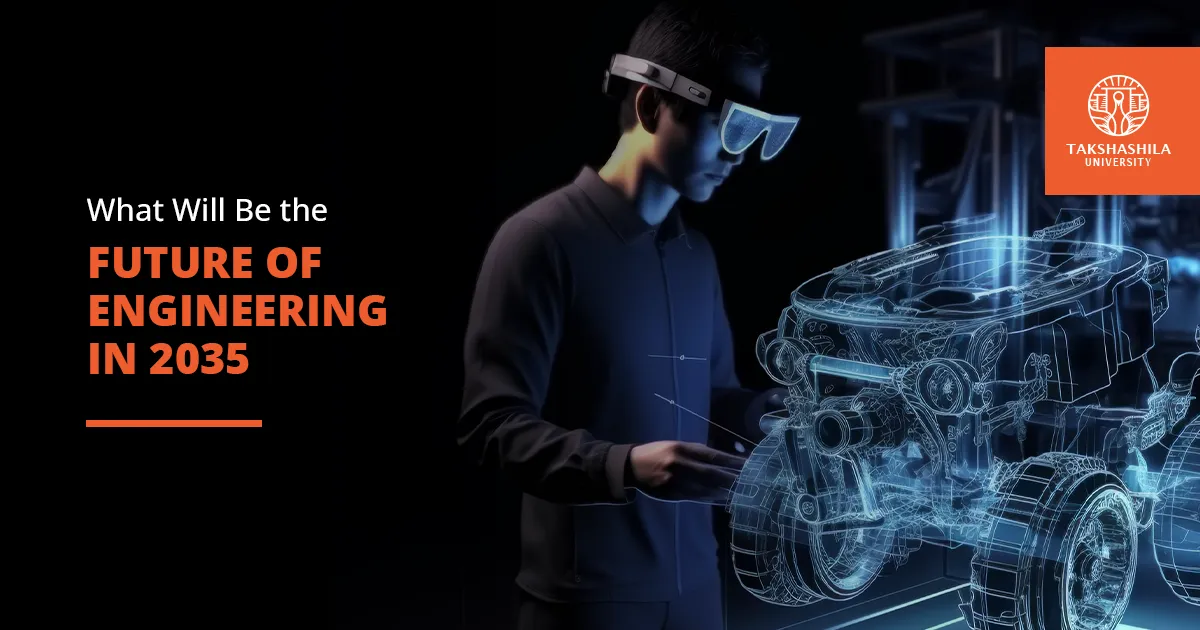
The future of engineering is being shaped by technology, sustainability, and multidisciplinary abilities, by the best colleges for computer science and engineering in Tamil Nadu.
Artificial intelligence will revolutionise the jobs in engineering, sustainability will dominate design, and careers such as digital twin engineers and AI safety experts will flourish.
At Takshashila University, the students are prepared for the coming decade with the skills that are required in engineering.
Introduction: Beyond the Blueprint: Imagining the Engineer of Tomorrow
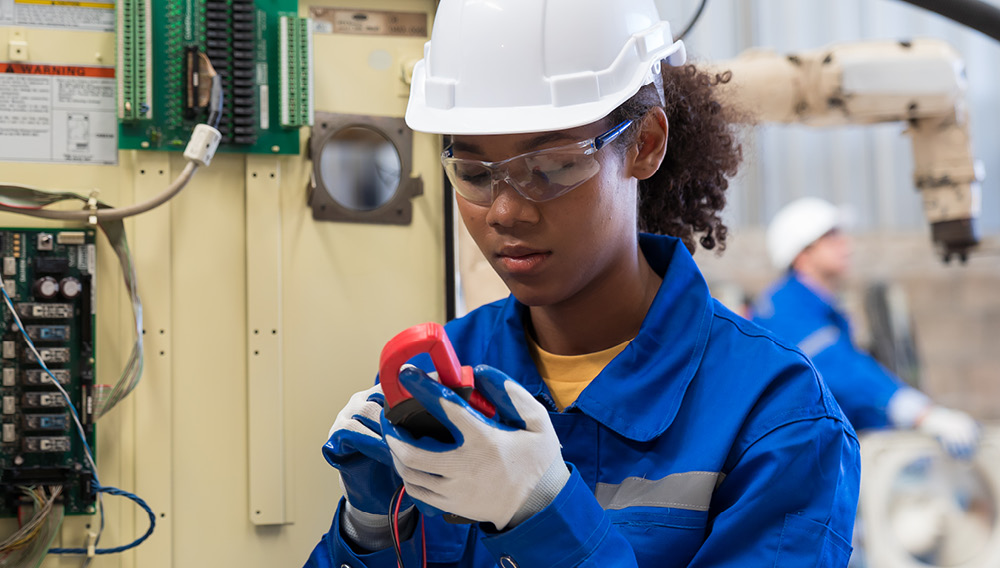
Never static, the evolution of engineering over the next decade is destined to be a whole other level compared to any previous ones.
The future of engineering is being crafted right now by the power of artificial intelligence, the need for sustainability, and brand new interdisciplinary engineering jobs which have only recently emerged.
In order for current engineering students to be prepared for what lies ahead by 2035, knowing the future of the field is not enough; it should be understood as the necessary foundation for their career path.
This blog will look into the main trends that are going to define engineering until 2035, what kind of jobs are going to appear or transform by then, and how engineering students can prepare themselves.
Want to build the skills tomorrow’s engineering careers will demand? Explore future-focused programmes at Takshashila University.
Artificial Intelligence Will Redefine, Not Replace, the Engineer

Most of the discourse on the future of engineering revolves around whether AI will make engineering jobs obsolete.
There is ample proof that this is not happening. According to the World Economic Forum’s Future of Jobs Report 2025, 170 million new jobs are expected to be created globally by 2030, against 92 million lost; a trend spanning all industries, engineering included.
Within engineering specifically, AI adoption has been slower so far, with only a few organisations running full-scale AI programmes
By 2035, AI is expected to be an integrated partner in processes such as design optimisation and predictive maintenance, rather than a substitute for engineering decisions.
What is certain so far is what tasks are being offloaded to automation. Repetitive coding, basic designs, and documentation tasks are increasingly automated.
This leaves engineers with more time for architectures and problem-solving. Some new job titles have also been invented because of the integration of AI, from digital twin engineers to AI safety experts.
Sustainability Will Move From Compliance to Core Design Principle
Engineering by 2035 is set to incorporate environmental concerns at the initial stages of design and planning rather than dealing with them in an ad hoc manner.
Engineers with knowledge of conventional engineering as well as sustainability sciences will be required to develop renewable energy sources, efficient water systems, smart grids and low-carbon manufacturing processes.
The field of energy and environmental engineering is currently one of the most rapidly developing combinations of AI and sustainability, where smart grid technology and resource prediction call for engineers with expertise in both areas.
Interdisciplinary Skills Will Define Engineering Career
Maybe one of the most obvious indicators for what the future of engineering holds lies in the increasing blurring of lines traditionally associated with disciplines.
Engineering teams now often comprise data scientists, product managers, and system architects working alongside actual engineers, requiring a level of cross-functional competence which was not seen much a decade ago.
The same WEF report lists AI and machine learning specialists among the fastest-growing roles worldwide through 2030, alongside data analysts and sustainability specialists, reinforcing how closely engineering’s future ties to these adjacent fields.
Those engineers who possess both deep knowledge of their discipline and experience with adjacent disciplines will fare better than engineers with one-dimension education.
Human Skills Will Become More Valuable, Not Less
The misconception often held by people is that as technology becomes more advanced, human skills lose their value.
The exact reverse seems to be the case. With routine work being increasingly done by machines, uniquely human skills like creative thinking, teamwork, and communication are what distinguish an average engineer from an outstanding one.
Companies today have a hard time finding the right combination of technical and human skills, and this is bound to get even worse with increasing levels of automation.
In the year 2035, engineers will be the most wanted ones who combine technical expertise with human skills like judgement, creativity, and intercultural communication.
Career Pathways That Will Come To Exist In The Future For Engineering Students
Some of the career pathways that have been forecasted to undergo huge expansion in the next ten years include the following:
AI & machine learning engineers are responsible for designing and managing intelligent systems.
Robotics integration engineers are responsible for integrating automated systems into production processes.
AI safety and compliance engineers are responsible for the safety and compliance of automated systems.
These students would have a significant advantage if they began developing their expertise in these fields right from the start, something Takshashila’s engineering programmes are designed to support through electives in AI, robotics, and sustainability.
Preparing Students for the Future of Engineering: The Takshashila University Approach
Takshashila University not only prepares engineers for the present world but also for the engineering profession of the future, starting from 2035.
Takshashila University offers courses that not only develop a basic understanding of engineering subjects but also prepare the students for future developments by incorporating new technologies like artificial intelligence, robotics, and sustainable engineering practice in its curriculum.
By developing innovation labs and industry-aligned electives in addition to mentorship from industry experts who are working on the interface between engineering and new technologies.
Takshashila University emphasises human-centred abilities like critical thinking, communication, and ethical reasoning, realising that these skills will become even more valuable as automation makes many routine technical skills obsolete. Contact our admissions team or follow us on @takshashilauniv for campus updates and student stories.
To wrap up: Preparing Today for the Engineering Profession of Tomorrow
However, the future of engineering is going to be influenced by such phenomena as artificial intelligence, sustainability and an interdisciplinary approach to solving problems.
But it is going to stay, in essence, a field in which the most important role belongs to human intelligence and human judgement.
Engineering students who are in their first year, choose to become continuous learners, have developed fluency in areas of technology that border the one that they specialise in and have mastered the human skills that can never be automated will end up in a position.
That is going to be greatly beneficial for them, since the profession of engineer in 2035 is going to be quite different from the profession of the engineer today.know what Projects for Engineering
Frequently Asked Questions About Future of Engineering
- Is artificial intelligence going to take engineers’ places by 2035?
The existing trends show that the field is more likely to undergo transformation rather than see its specialists replaced. The routine duties will be increasingly taken up by artificial intelligence, while the demand will rise for engineers capable of managing AI projects and building them.
- Which other engineering occupations may be created by 2035?
Occupations of digital twin engineers, AI safety engineers, and robotics integration engineers have already gained popularity. They combine engineering skills with the use of innovative technologies. There is a lot of growth potential in these occupations for the coming years.
- What role will sustainability play in the future of engineering?
Sustainability will become one of the basic principles of design. In all fields of engineering, specialists will have to take environmental factors into account right at the start of working on their projects.
- What kinds of skills will engineering students need for their futures?
Technical proficiency in AI and automation technologies together with good human skills such as critical thinking and communication skills will become very important. The interdisciplinary skills in data science and sustainability will also bring added value. It is said that employers have difficulties in finding the appropriate candidates.
- Will the core engineering fields such as mechanical or civil engineering be important for the future?
Yes, they will still be needed, but they will include digital solutions, AI, and sustainability approaches. Combining traditional engineering skills with technological fluency will be valuable. Specialisation will not play the role that it did before.
- How is AI currently applied in engineering work environments?
The current applications of AI in engineering are limited to design optimisation, prediction of failures and maintenance and analysis of huge amounts of data. Still, many organisations are at an early stage of adopting AI. Its full integration into engineering practices is expected in 2035.
- Do entry-level jobs in engineering face threats from automation?
Routine tasks that are part of the entry-level jobs are automated, potentially changing the way graduates launch their careers. But this often translates into new graduates doing more complex and high-value jobs right away.
- What should engineering students do to prepare for interdisciplinary careers?
Learning basics of data science, sustainability, or artificial intelligence, in addition to an engineering major, is very advantageous. Working on cross-functional projects and hackathons is also helpful from the standpoint of gaining practical experience.
- Why are human capabilities becoming increasingly important despite automation?
As a result of automation, certain skills that are exclusively human are getting more valuable. The companies prefer to hire engineers who have not only professional skills but also strong judgement skills. The latter cannot be substituted by any type of artificial intelligence.
- How does Takshashila University make its students future-ready in engineering?
At Takshashila University, besides learning about core disciplinary competencies, students learn about technologies such as artificial intelligence and sustainable engineering along with building innovative laboratories and industry mentoring that makes them future-ready. It is important to emphasise human-centric abilities too for future success.