

Placements at private engineering colleges are one of the biggest factors students and parents consider when choosing an engineering college. While many private colleges report impressive placement figures, the numbers alone don’t reveal how well a college prepares its students.
The key is understanding which placement figures matter and which questions to ask before making a decision. This guide explains what the numbers really mean and helps answer an important question many families ask: Are private engineering college placements good?
Why Placement Data Is So Often Misleading
When comparing placements at private engineering colleges, it’s important to understand how placement figures are calculated before concluding.
Take the common “100% placement” claim. At some institutions, it refers only to students who participated in campus placements rather than the entire graduating batch. Those pursuing higher studies, preparing for competitive exams, or pursuing entrepreneurship may not be included in the final percentage.
The highest salary package is another figure that attracts attention, but it usually reflects the achievements of one or two students. It doesn’t reflect what most of the graduating class receives.
A better question to ask is: “What is the median salary package?” Since it represents the middle value of all salary offers, it gives a clearer idea of what a typical student can expect.
Ask how the college defines placements. Some institutions include:
- Paid internships
- Pre-placement offers (PPOs)
- Multiple job offers received by one student
Others report only confirmed full-time jobs secured through on-campus recruitment. Some colleges also report off-campus placements, while others include only jobs secured through campus recruitment. Asking how placements are classified helps you compare colleges fairly.
Tip: During a campus visit, ask, “What is your median package, and how is your placement percentage calculated?” You’ll get a much clearer picture than headline statistics alone can provide.
What Drives Good Placements at Private Engineering Colleges

Strong placement records are built over four years, not just during the final semester. Colleges that consistently achieve good results start preparing students early through skill development, industry exposure, and career guidance.
Industry Partnerships
Don’t judge a college by the number of MoUs it has signed. Ask what students actually gain from those partnerships. Internships, industry projects, guest lectures, industrial visits, certification programmes, and campus placement drives matter far more than signed agreements.
How Colleges Prepare Students for Placements
Colleges with strong placement records usually prepare students throughout their degree through:
- Career guidance and mentoring
- Communication and aptitude training
- Technical skill development
- Industry workshops and live projects
- Resume building and mock interviews
- Coding assessments and HR interview preparation
A dedicated placement and career development cell coordinates many of these activities, including recruiter outreach, internships, training programmes, and campus recruitment. Starting this preparation early gives students more time to build confidence and improve the skills employers expect.
Internship Opportunities
Internships give students practical experience, help them apply classroom learning, and introduce them to workplace expectations. Many companies also use internships to identify candidates for full-time roles through pre-placement offers.
Instead of asking how many internships are offered, ask how many lead to permanent roles and whether the college actively supports internships across multiple industries.
Faculty and Mentorship
Faculty with industry experience and project-based learning can help students strengthen technical knowledge, practical workplace skills, and overall employability skills. Mentorship on research and innovation projects also gives students valuable guidance outside the classroom.
Recruiter Relationships
Beyond student preparation, the strength of a college’s industry network also influences placement opportunities. Colleges that maintain long-term relationships with recruiters often see hiring companies return year after year. Returning recruiters can indicate that employers are satisfied with the quality of graduates and continue to find suitable candidates from the institution.
Institutional Legacy
Long-established institutions often have stronger relationships with recruiters because of years of industry engagement. For example, Takshashila University, backed by the 25-year legacy of the Mailam Group and Sri Manakula Vinayagar institutions, is one example of how an established academic network can contribute to consistent recruiter engagement. This is one of many factors families can consider when evaluating any engineering college.
The Placement Journey
In many colleges, placement preparation follows a series of stages:
1. Career orientation
2. Skill development
3. Internships and industry exposure
4. Placement training and interview preparation
5. Campus recruitment
6. Job offers
When colleges invest in each of these stages, students are more likely to graduate with the confidence and skills employers expect.
Questions to Ask Before Trusting a College’s Placement Claims
Use this checklist when visiting colleges or attending admission counselling sessions.
1. What is the median salary package, not just the highest package?
2. What percentage of the entire graduating batch secured placements?
3. Which companies recruited students over the last two years?
4. How many companies actually hired students, rather than only visiting the campus?
5. Does the college have a dedicated placement and career development cell?
6. When does placement training begin?
7. Are internships reported separately from full-time placements?
8. Are placement reports publicly available?
9. Which recruiters return to campus every year?
These questions reveal much more than promotional brochures and help you compare colleges using the same criteria. Colleges that publish annual placement reports often provide greater transparency than those that share only headline figures, making it easier to verify their placement claims.
Branch-Wise Placement Reality: CSE vs Mechanical vs Civil vs ECE
Placement opportunities vary across engineering branches.
- Computer Science Engineering (CSE), AI, and related technology programmes often record higher placement numbers because of strong demand.
- Electronics and Communication Engineering (ECE) graduates find opportunities in electronics, semiconductors, telecommunications, and IT services, while Mechanical and Civil hiring depends more on manufacturing, infrastructure, construction, and broader economic conditions.
Choosing a branch based on your interests, aptitude, and long-term career goals is usually more important than chasing placement percentages alone.
How Takshashila University Approaches Placements
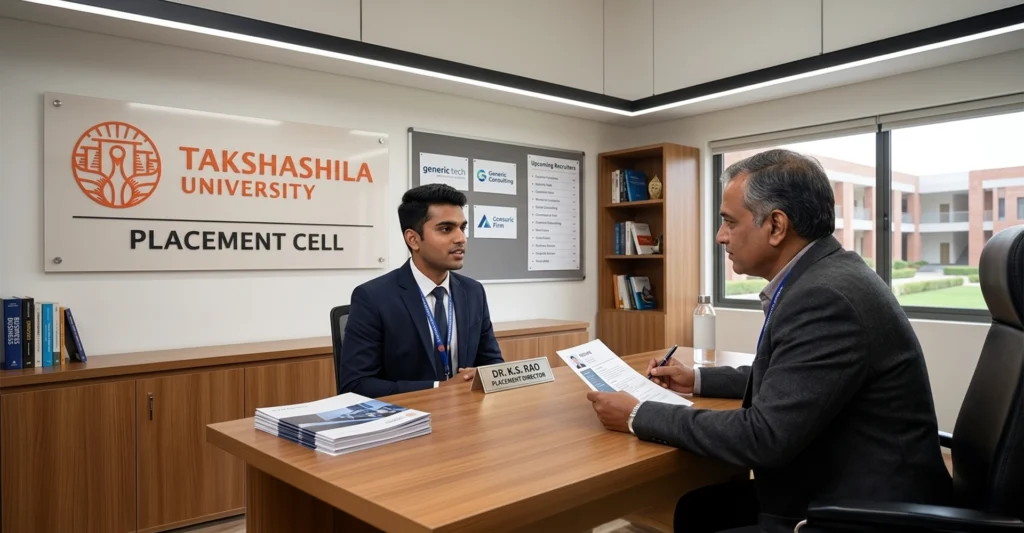
Takshashila University approaches placements as a continuous career development process rather than a final-year activity. From the early stages of their programme, students receive career guidance, aptitude and technical training, communication skill development, resume-building support, mock interviews, and placement preparation.
Classroom learning is complemented by workshops, industrial visits, live projects, internships, and other industry interactions that give students practical exposure before they enter the job market.
To learn more about the university’s placement process, recruiters, career development initiatives, and industry partnerships, visit the placements and career development page.
Conclusion
Are private engineering college placements good? In many cases, yes. But placement figures are only one part of the story. Before making a decision, look beyond the placement percentage and understand how the college prepares students over four years. Consistent career guidance, internships, practical exposure, and industry engagement often say more about placement quality than a single placement percentage.
Whether you’re evaluating Takshashila University or any other institution, use the same checklist for every college you consider. The right questions today can lead to a better career decision tomorrow.
Frequently Asked Questions
What is a good placement percentage for engineering colleges?
There is no ideal placement percentage. It varies depending on the engineering branch, recruiter quality, and the college’s placement record. Instead of focusing on a single percentage, compare median salary packages, internship outcomes, and the overall placement process.
How can I verify a college’s placement claims?
Ask for recent placement reports, the median salary package, recruiter lists from the past two years, internship statistics, and the percentage of the entire graduating batch placed. You can also speak with current students or alumni to understand how the placement process works in practice.
Do internships count as placements?
Not always. Some colleges report internships separately, while others include certain paid internships or pre-placement offers within placement statistics. Always ask how the institution defines placements before comparing engineering colleges.
Are placements guaranteed at private engineering colleges?
No college can legally guarantee placements. While some institutions consistently achieve strong placement records, job offers depend on factors such as academic performance, skills, interview performance, recruiter demand, and market conditions.
Are private engineering college placements good?
Yes, many private engineering colleges offer strong placement opportunities, but the quality varies from one institution to another. Instead of relying only on placement percentages, look at factors such as industry partnerships, internship opportunities, median salary packages, recruiter quality, and placement preparation to make an informed decision.