Short Summary
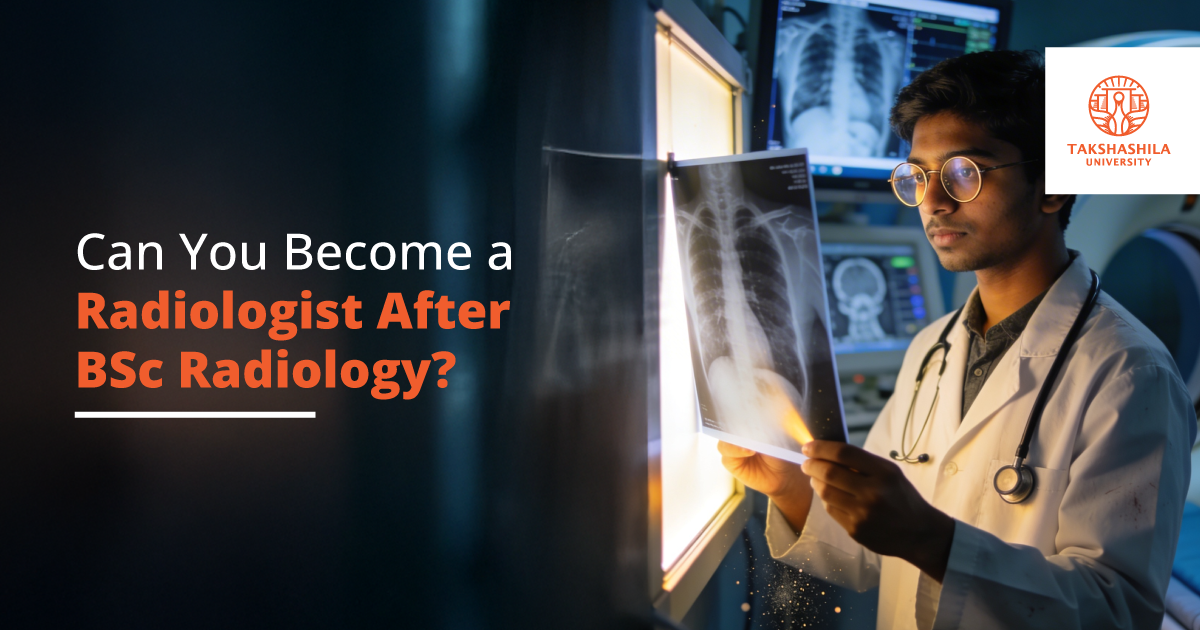
Can I become a radiologist after a BSc in radiology? This is a common query that students interested in pursuing a career in medical imaging often ask.
Although a BSc in radiology provides excellent prospects in diagnostic technology, becoming a radiologist is not directly possible after completing a BSc in radiology in India. To become a radiologist, one should complete MBBS and then specialise in radiology. In this blog, we will discuss the correct way of becoming a radiologist, prospects, and other growth opportunities in the field of imaging science.
Introduction
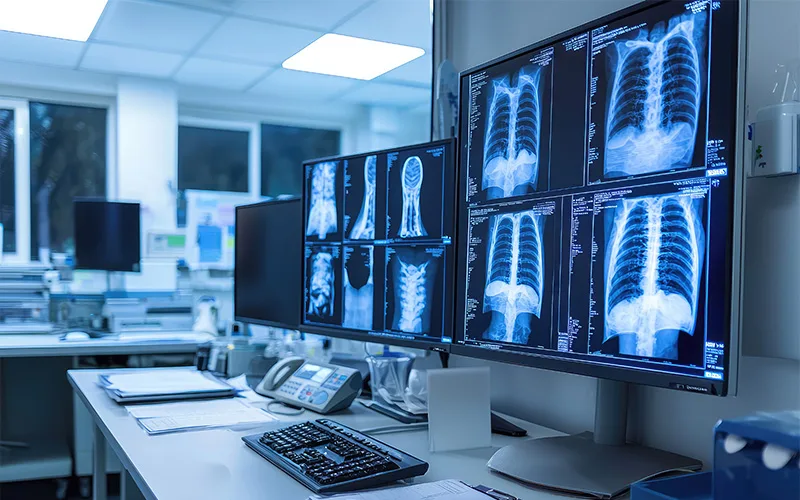
Many students often ask us, ‘Can I become a radiologist after a BSc in Radiology? This is a very important query, especially for students who are interested in diagnostic imaging and wish to build a long-term career in the healthcare industry.
Though a BSc in radiology provides a wide range of prospects in medical imaging, to become a radiologist in India, a candidate has to follow a different route.
In this blog, we will try to explain this difference to you and help you understand the various options that are available to you. also have a look at Is Radiology a Good Career Choice? Complete Guide
Understanding the Radiologist and a Radiology Technologist
Before we answer the question of whether you can become a radiologist after completing a BSc in radiology, we first need to know the difference between two similar but different professions.
A radiologist is a medical practitioner who has received the proper medical training and has specialised in the diagnosis of different diseases using imaging techniques such as X-rays, CT scans, MRI scans, ultrasound scans, and PET scans.
For someone to become a radiologist in India, he/she has to do the following:
- Complete their MBBS (Bachelor of Medicine and Bachelor of Surgery)
- Complete their postgraduation in radiology (MD/DNB).
- Get themselves registered with the National Medical Commission
- Only after completing the above requirements can someone legally diagnose patients.
A BSc Radiology graduate can also be referred to as a radiology technologist or radiographer. A radiology technologist can:
- Operate imaging equipment
- Position patients appropriately
- Ensure radiation safety
Help radiologists in diagnosing patients through imaging techniques.
Can You Become a Radiologist After a BSc in Radiology?
No, you can’t become a radiologist with a BSc in radiology. But the extended answer might surprise you.
If you are wondering, Can I become a radiologist after a BSc in radiology? the answer is yes, you can. However, you will have to complete your MBBS course afterward.
The pathway for becoming a radiologist in India
If you are wondering about the correct career pathway for becoming a radiologist, here’s the correct sequence:
- Qualify for NEET UG
To secure admission to MBBS courses, candidates must qualify for the National Eligibility Cumulative Entrance Test Undergraduate, or NEET UG.
- Complete MBBS course (5.5 Years)
This course consists of 4.5 years of academic learning and 1 year of internship.
- Qualify for NEET PG
After completing the MBBS course, candidates must qualify for the National Eligibility Cumulative Entrance Test Postgraduate, or NEET PG.
- Pursue MD/DNB radiodiagnosis course (3 Years)
Only after completing these steps can you become a certified radiologist. This entire process will take about 8 to 10 years after completing the BSc course.
Why Is MBBS Mandatory?
Radiologists are medical doctors. They have the legal authority to:
- Diagnose life-threatening conditions
- Give official medical reports
- Make treatment recommendations
- Perform interventional radiology procedures
This makes radiologists medical doctors. Indian laws demand radiologists have a medical degree recognised and regulated by the National Medical Commission.
A BSc in radiology only deals with the science and technical operation of imaging. It does not deal with medical diagnosis. Therefore, it does not qualify you to become a radiologist.
Career Scope After BSc Radiology in India
Even though you cannot directly pursue a career as a radiologist, the BSc Radiology course offers strong and stable career opportunities.
This growth is due to the rising awareness of the importance of healthcare, the growth of health insurance, and the development of hospital infrastructure.
The career opportunities available for a student who has completed the BSc Radiology course are the following:
- MRI Technologist
- CT Scan Technologist
- Radiology Technician
- Diagnostic Imaging Technologist
- Cath Lab Technician
According to the report, the average annual salary for a radiology technician in India for an entry-level position ranges between Rs 2.5 lakh and Rs 5 lakh, and the salary increases based upon experience, certifications, and higher qualifications.
Is It Worth Doing MBBS After BSc Radiology?
However, if you still want to pursue the thought Can I be a Radiologist after completing a BSc in Radiology? then you need to take into consideration the following factors:
- Academic commitment
NEET-UG is a highly competitive entrance examination. It has over 20 lakh applications each year for a limited number of MBBS seats.
- Time investment
With the addition of MBBS and MD courses, you need almost a decade more.
- Financial planning
With the addition of the MBBS and MD courses, you need almost a decade more. However, the benefits of becoming a radiologist include:
- Higher earning potential
- Greater autonomy
- Leadership opportunities
- Academic opportunities
Alternative Options Without MBBS
In case you are not interested in pursuing MBBS, there are excellent prospects for professional growth in the field of imaging sciences.
- MSc in Radiology/Medical imaging technology
This helps in upgrading skills and provides scope for a teaching and guiding position.
- Specialised certifications
Specialised training in MRI, CT scans, mammography, and interventional imaging helps in becoming more employable.
- Healthcare management
An MBA in Hospital Administration helps in becoming a manager in diagnostic centres.
- Academic career
With a postgraduate qualification, one can become a lecturer/instructor in allied health sciences.
At Takshashila University, we always advise students to weigh the prospects of medical and allied health sciences before making a choice.
Demand for Radiologists and Imaging Professionals in India
India is facing a shortage of radiologists, especially in semi-urban and rural areas. Research studies have been published in the Indian Journal of Radiology and Imaging that show the uneven distribution of radiologists in India.
At the same time, there is an increase in the utilisation of diagnostic imaging modalities due to:
- Rise in chronic diseases
- Growth in private sector facilities
- Preventive health screenings
- Technological advances in imaging modalities
This is where not only radiologists but also radiology technologists have opportunities to grow.
Comparing the Career Paths
| Aspect | BSc Radiology | Radiologist |
| Qualification(s) | Undergraduate degree | Medical degree + PG |
| Duration | 3-4 years | 8-10 years |
| Role | Operates imaging equipment | Diagnoses and reports |
| Legal authority | Technical role | Medical authority |
| Income potential | Moderate | High |
This differentiation helps clarify the answer when asking, ‘Can I become a radiologist after a BSc in Radiology?
Shaping Future Imaging Professionals at Takshashila University
At Takshashila University, we are dedicated to providing high-quality education in allied health sciences with strong clinical exposure and industry alignment.
We facilitate our students in making the right career decisions through transparent career counselling. This helps them understand the difference between radiology and medical radiology.
When you ask the question, ‘Can I become a radiologist after a BSc in Radiology, we have an answer for you.
We believe in the power of knowledge to make the right decisions to build successful careers. Whether you want to become a proficient imaging technologist or start your journey to become a radiologist one day, we are here to help you achieve your aspirations responsibly and confidently. Wondering if BSc Radiology can lead to becoming a radiologist? Explore the career path Takshashila University
To wrap up
So, have you got the answer to your question: can I become a radiologist after a BSc in radiology?
Yes, but after completing MBBS and postgraduate study in radiodiagnosis in India. No, you cannot become a radiologist after completing a BSc in radiology; you need to opt for the special medical course for this.
FAQs About Can I Become a Radiologist After BSc in Radiology?
- Can I become a radiologist after completing a BSc in Radiology?
No, you need to become an MBBS and then an MD/DNB in radiodiagnosis.
- Is passing the NEET exam compulsory to become a radiologist?
Yes, NEET-UG to become an MBBS and NEET-PG to become a postgraduate are compulsory.
- Can I become an MD in radiology after a BSc in radiology?
No, to become an MD in radiology, you need to be an MBBS graduate.
- Does a BSc in radiology lead to an MBBS?
Yes, but it does not reduce the duration of the course.
- How many years does it take to become a radiologist?
It takes around 8-10 years after starting MBBS to become a radiologist.
- What is the salary of a radiologist in India?
The salary of a radiologist in India ranges from Rs 8 to 30 LPA.
- What is the salary after BSc Radiology?
The salary for an entry-level candidate lies in the range of ₹2.5-5 LPA.
- Is it a good career in India?
Yes, it is a good career in India because the demand for diagnostic imaging is increasing steadily.
- Can I open a diagnostic centre after completing BSc Radiology?
You can work in a diagnostic centre, but you cannot own one.
- Is it better to do an MBBS or a BSc in Radiology?
Both degrees are different, and if you want to become a radiologist, you should do MBBS, but if you want to do a technical job in imaging, you should do BSc Radiology.