
B.A. Indian Philosophy and Tourism
Study B.A. Indian Philosophy and Tourism in Tamil Nadu
- Hands-on Training
- Faculty with International Experience
- Advanced Curriculum
- Upto 100% Scholarship based on merit

About the Course
The B A Indian Philosophy and Tourism in Tamil Nadu at Takshashila University is a unique interdisciplinary programme that combines India’s rich philosophical traditions with modern tourism and heritage management. As one of the leading B A Indian Philosophy and Tourism colleges in Tamil Nadu, the programme helps students understand Indian philosophy, culture, spirituality, and sustainable tourism practices.
Students explore concepts such as yoga, dharma, ethics, Indian knowledge systems, and cultural heritage while learning how to design responsible and culturally sensitive tourism experiences. Through classroom learning, field visits, heritage studies, and practical exposure, the programme prepares graduates to promote India’s cultural legacy while supporting sustainable tourism development.
Why Choose the B.A. Indian Philosophy and Tourism?
The B.A. Indian Philosophy and Tourism programme at Takshashila University is designed to provide students with a unique blend of philosophy, culture, heritage conservation, and tourism management. The curriculum combines academic learning with practical experiences, enabling students to understand India’s rich traditions while developing professional skills for the growing tourism and cultural heritage sectors.
Recognized among the best Indian Philosophy and Tourism colleges in Tamil Nadu, Takshashila University offers experiential learning through heritage site visits, cultural projects, fieldwork, research activities, and interactions with industry professionals. Students gain valuable insights into sustainable tourism, cultural preservation, destination management, and ethical tourism practices.
As one of the Best Indian Philosophy and Tourism Universities in Tamil Nadu, the University prepares graduates with strong communication, research, leadership, and cultural management skills to build successful careers in tourism, heritage organizations, education, and public service.
Industry Recognition
Study India's philosophy, traditions, heritage, and cultural values through an interdisciplinary curriculum.
Career-Focused Learning
Gain hands-on experience through heritage tours, field visits, cultural projects, internships, and tourism-related activities.
Excellent Placement Support
Learn from experienced academicians and professionals specializing in philosophy, culture, and tourism studies.
Trusted University for IT Education
Develop research, communication, leadership, and destination management skills for careers in heritage and tourism sectors.
Course Curriculum

Year 1
The first year of the B.A. Indian Philosophy and Tourism programme introduces students to the basic principles of economics, both micro and macroeconomic theories. The foundation of economic theory is laid, including the study of market dynamics, production processes, and consumer behavior. Additionally, you will begin learning the basics of mathematical methods for economics and statistical techniques that support economic analysis.
Key Subjects:
- Introduction to Economics
- Principles of Microeconomics
- Indian Economy: Issues and Policies
- Mathematical Methods for Economics
- Basic Statistical Techniques for Economists
Year 2
Building upon the first-year fundamentals, the second year explores deeper into topics such as macroeconomics, economic systems, and the Indian economy post-independence. Students will also engage in more advanced mathematical concepts that enhance their ability to analyze economic data and model economic behavior. The year also introduces international trade theory and policy, helping students understand the global economic system.
Key Subjects:
- Advanced Microeconomics
- Macroeconomics: Theory and Policy
- International Trade
- Development Economics
- Economic Systems
- Indian Economy Post-Independence
Year 3
In the final year, the focus shifts to more specialized areas such as agricultural economics, economic growth, globalization, and natural resource management. Students will also study advanced topics in financial systems, economic growth processes, and the role of computers in economics, preparing them for both practical applications and further academic pursuits.
Key Subjects:
- Agricultural Economics
- Advanced International Economics
- Economics of Natural Resources
- Economic Growth and Globalization
- Public Finance and Policy
- Economics with Computer Applications
Career Scope
After completing the B.A. Indian Philosophy and Tourism programme, graduates can pursue rewarding careers in tourism, heritage management, cultural organizations, museums, travel companies, government tourism departments, educational institutions, NGOs, and research organizations. Career opportunities include Heritage Tourism Officer, Tour Manager, Cultural Programme Coordinator, Museum Curator, Tourism Consultant, Travel Executive, Heritage Research Associate, Content Writer, and Cultural Resource Manager.
With growing opportunities in India’s tourism and heritage sectors, B A Indian Philosophy and Tourism Placement in Tamil Nadu provides graduates with pathways to build successful careers while contributing to the preservation and promotion of India’s cultural and philosophical heritage.
- Social Worker
- Child-Rights or Women-Rights Officer
- Disaster Relief Volunteer / Field Coordinator
- Community Development Officer
- NGO Programme Coordinator
- Government Welfare-Scheme Implementation Officer
Why TAKSHASHILA?

At Takshashila University, we are committed to providing a high-quality education in economics that prepares you for a successful career in a dynamic and evolving global economy. Here’s what we offer:
Industry-Relevant Curriculum
Our curriculum is designed to align with current industry needs and equip you with the skills required to thrive in the modern world of economics.
Personalized Learning Experience
With small class sizes and individual attention from faculty, you will have the support you need to excel academically and professionally.
Global Perspective
We provide opportunities for students to gain international exposure and understand the nuances of global economic systems, preparing them for global careers.
Practical Learning Opportunities
Students will engage in live projects and internships, developing real-world problem-solving skills and gaining valuable industry experience.

To apply for the B.A. Economics Honors programme, candidates must meet the following criteria:
- Academic Qualification: You should have completed your 10+2 or equivalent with science subjects (preferably Biology, Chemistry, and Physics).
- Minimum Marks: You need to have at least 50% marks in your qualifying exam.
- Entrance Exam/Interview: Some cases may require an entrance exam or interview to check your suitability for the program.

For All Programmes except MBA, MCA, M.Tech, and Integrated Programmes offered by Sunstone, FacePrep, Kalvium and NxtWave
S.No | % of Marks | Scholarship Amount in Tuition Fees per year |
1 | 60% – 75% | 10% |
2 | Above 75 % – 90 % | 25 % |
3 | Above 90 % | 50 % |
Calculation of percentage of Marks (+2 of HSC / 2nd Year of APBIM or +2 of CBSE or Equivalent)
- Engineering – Average marks in Mathematics, Physics, Chemistry/Computer Science
- Lateral Entry – Average marks in Diploma Programme.
- Agriculture – Average marks in Physics, Chemistry, Biology / Botany &Zoology
- AHS / BPT / Pharmacy – Average marks in Physics, Chemistry, Biology / Botany &Zoology/Bio Tech
- UG – Arts & Science / Hotel Management – Overall +2 marks – (+2 of HSC / 2nd Year of APBIM or +2 of CBSE or Equivalent)
- PG – Overall % in UG
- Diploma – Average mark in 10th /Equivalent
MBA, MCA, M. Tech, and Integrated Programmes offered by Sunstone, FacePrep, Kalvium and NxtWave – No Academic Scholarship applicable.
Experience Beyond the Classroom at Takshashila University
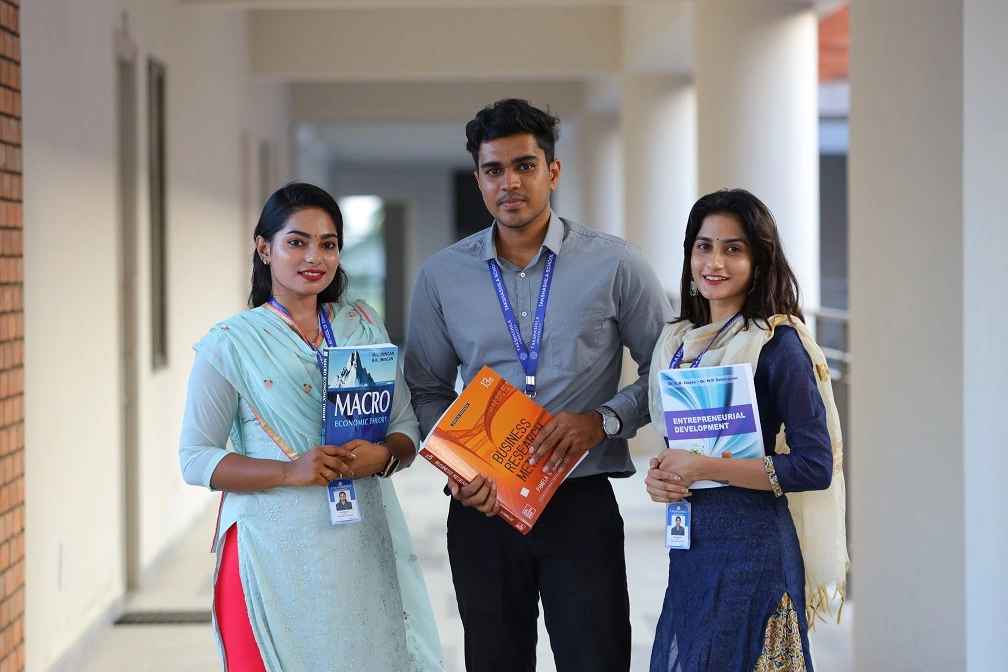
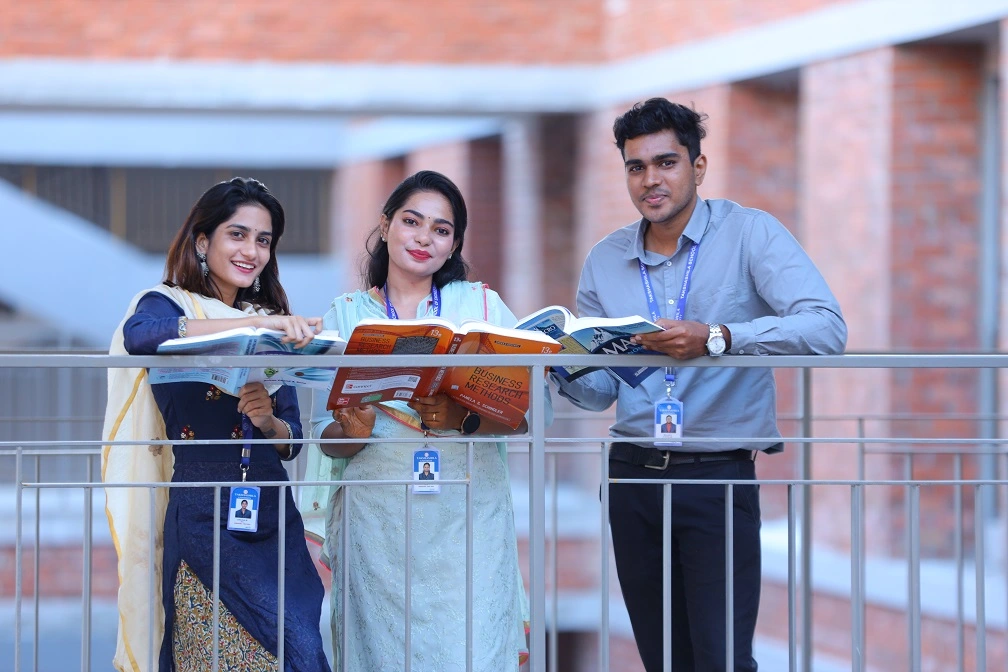
At Takshashila University, life extends beyond academics. Students engage in a range of extracurricular activities, networking events, and internships that help develop leadership skills, teamwork, and personal growth.
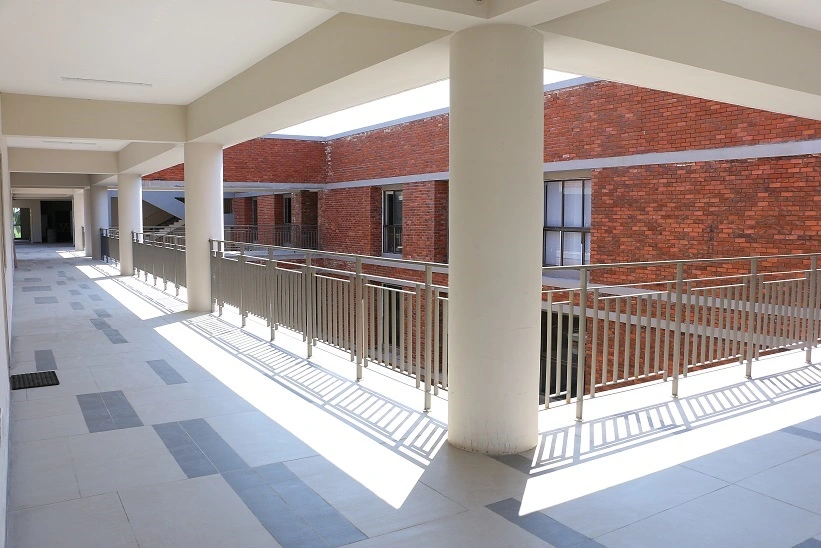
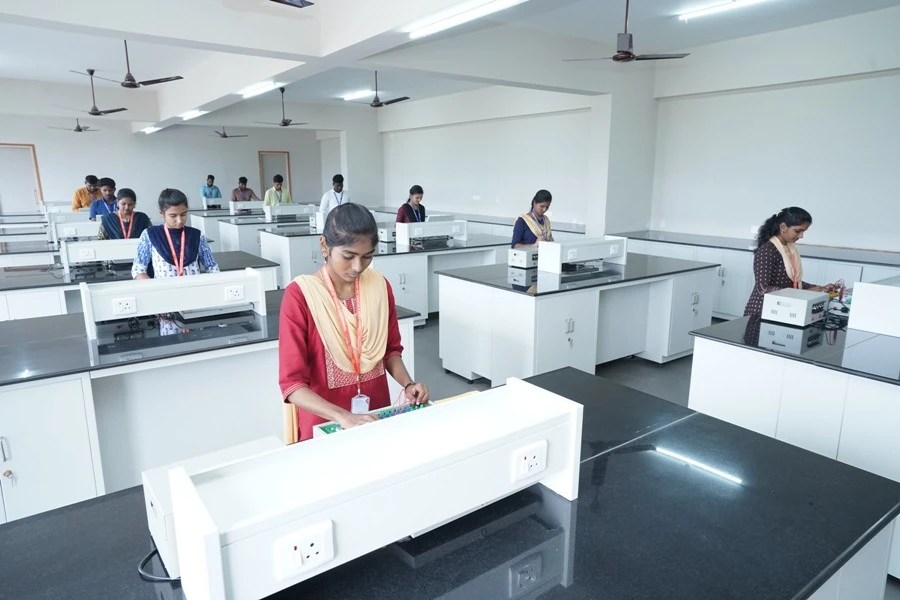
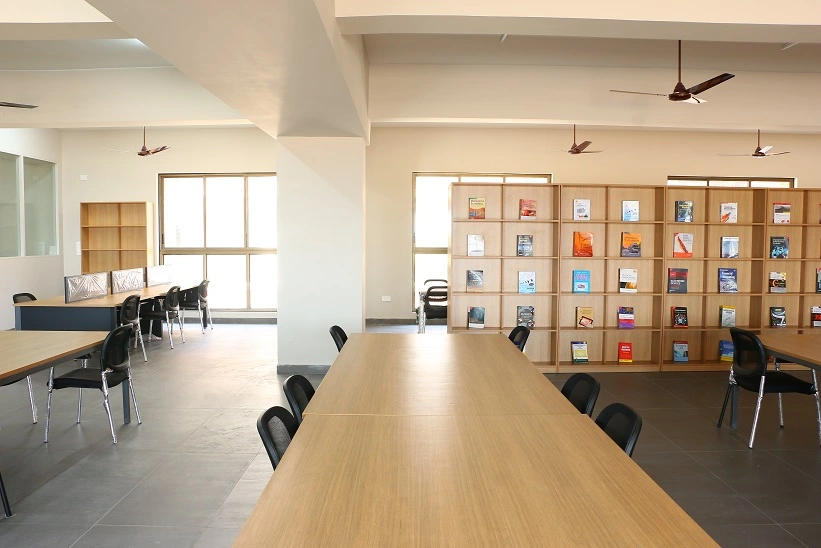
Spread over 150 acres
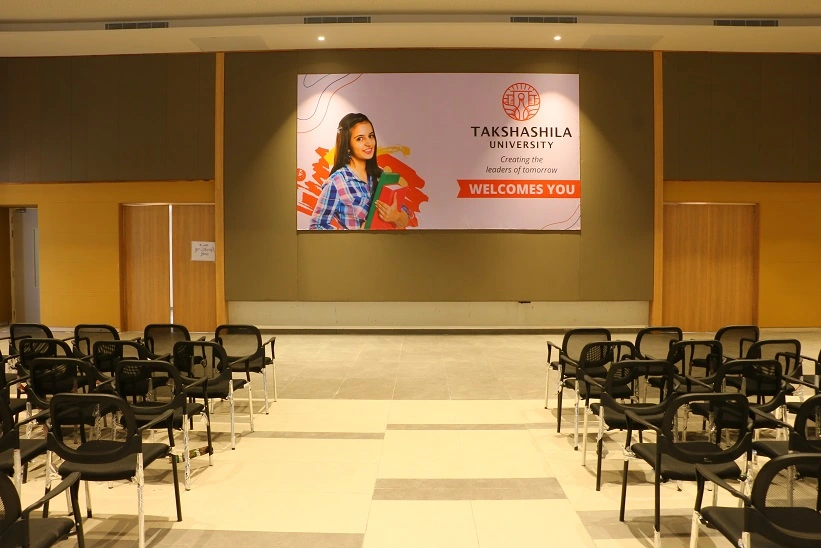
At Takshashila University, you will have ample opportunities to hone your skills in real-world healthcare settings, utilising state-of-the-art medical facilities and simulation labs on our 150-acre campus.



Apply to the Best B A Indian Philosophy and Tourism College in Tamil Nadu
FAQs
1. Which Is the Best B.A. Indian Philosophy and Tourism College in Tamil Nadu?
Takshashila University is among the best B.A. Indian Philosophy and Tourism colleges in Tamil Nadu, offering heritage-focused education, experienced faculty, practical learning, internships, cultural exposure, and placement support.
2. What Is a B.A. Indian Philosophy and Tourism Programme?
B.A. Indian Philosophy and Tourism is a three-year undergraduate programme that combines Indian philosophy, culture, ethics, heritage studies, and tourism management to prepare students for careers in tourism, education, and cultural organizations.
3. Why Choose B.A. Indian Philosophy and Tourism at Takshashila University?
Takshashila University provides industry-oriented learning through heritage visits, tourism projects, internships, experienced faculty, research opportunities, and career guidance to prepare students for global career opportunities.
4. How Can I Apply for B.A. Indian Philosophy and Tourism Admission in Tamil Nadu?
Students who have completed Higher Secondary (10+2) or an equivalent qualification from a recognised board and satisfy the university’s eligibility criteria can apply for admission at Takshashila University.
5. What Is the Eligibility Criteria for B.A. Indian Philosophy and Tourism in Tamil Nadu?
Candidates should have completed Class 12 or an equivalent qualification from a recognised board with the minimum qualifying marks prescribed by the university.
6. What Is the Duration of the B.A. Indian Philosophy and Tourism Course?
The programme is a three-year undergraduate degree comprising six semesters with classroom learning, field visits, educational tours, internships, and practical training.
7. What Subjects Are Covered in the B.A. Indian Philosophy and Tourism Programme?
Students study Indian Philosophy, Tourism Management, Indian Heritage, Ethics, Cultural Studies, Hospitality, Heritage Conservation, Communication Skills, and Tourism Marketing.
8. What Is the B.A. Indian Philosophy and Tourism Fee Structure in Tamil Nadu?
The fee structure varies by institution. Takshashila University offers a transparent fee structure along with complete admission guidance for prospective students.
9. Does Takshashila University Offer Scholarships for B.A. Indian Philosophy and Tourism Students?
Yes. Takshashila University offers scholarships for eligible students based on academic merit and other criteria under the university’s scholarship policy.
10. Are Internship Opportunities Available for B.A. Indian Philosophy and Tourism Students?
Yes. Students gain practical experience through internships with tourism companies, museums, heritage sites, hotels, cultural organizations, and travel agencies.
11. What Is the Scope of Indian Philosophy and Tourism in Tamil Nadu?
The programme offers career opportunities in tourism management, hospitality, heritage conservation, cultural organizations, museums, education, travel companies, and government tourism departments.
12. What Career Options Are Available After B.A. Indian Philosophy and Tourism?
Graduates can work as Tourism Executives, Heritage Managers, Travel Consultants, Tour Coordinators, Cultural Researchers, Hospitality Professionals, Museum Executives, and Educators.
13. Can B.A. Indian Philosophy and Tourism Graduates Get Government Jobs?
Yes. Graduates can apply for positions in tourism departments, archaeological departments, museums, cultural ministries, public administration, and government tourism organizations.
14. How Are the Placement Opportunities for B.A. Indian Philosophy and Tourism Students?
Takshashila University supports students through placement training, internship opportunities, industry interaction, career counselling, and recruitment assistance.
15. Can I Study Abroad After Completing B.A. Indian Philosophy and Tourism?
Yes. Graduates can pursue postgraduate programmes in Tourism Management, Heritage Studies, Philosophy, Cultural Studies, Hospitality Management, and International Tourism abroad.
16. What Entrance Exams Are Required for B.A. Indian Philosophy and Tourism Admission in Tamil Nadu?
Admission requirements vary among institutions. Students should refer to the latest admission guidelines provided by Takshashila University before applying.
17. What Salary Can I Expect After Completing B.A. Indian Philosophy and Tourism?
Salary depends on the employer, experience, job role, and skills. Graduates can earn competitive salary packages in tourism, hospitality, heritage management, and cultural sectors.
18. What Is the Future Scope of Indian Philosophy and Tourism?
The future is promising with growing demand for heritage tourism, eco-tourism, spiritual tourism, sustainable travel, cultural preservation, and digital tourism services.
19. Who Are the Top Recruiters for B.A. Indian Philosophy and Tourism Graduates?
Graduates are recruited by tourism boards, travel agencies, hotels, museums, heritage organizations, cultural institutions, hospitality companies, and government tourism departments.
20. What Industry Trends Are Shaping Indian Philosophy and Tourism Careers?
Current trends include heritage tourism, experiential travel, eco-tourism, spiritual tourism, digital tourism platforms, sustainable tourism, and cultural heritage conservation.