
M.Sc Physics
M.Sc Physics in Tamil Nadu: Build Your Career in Physics
- Hands-on Training
- Faculty with International Experience
- Advanced Curriculum
- Upto 100% Scholarship based on merit

About the Course
M Sc Physics is a specialized postgraduate program for aspiring research physicists, physics scientists, and technology professionals. Offered by leading Tamil Nadu colleges, this degree combines advanced physics theory with cutting-edge research expertise and experimental innovation. Students master quantum mechanics, astrophysics, condensed matter physics, and advanced experimental techniques. The curriculum emphasizes research-driven learning through independent projects, advanced laboratory work, thesis research, and mentorship from experienced physicists. Graduates gain advanced physics knowledge and research expertise, enabling them to launch careers as research physicists, technology scientists, and academic physicists across Tamil Nadu’s leading research institutions.
WHY CHOOSE M SC PHYSICS
Choosing M Sc Physics in Tamil Nadu offers strategic advantages for aspiring research physicists and physics scientists. First, Tamil Nadu colleges provide advanced research-focused curriculum designed with physics faculty, research scientists, and technology experts ensuring cutting-edge knowledge and innovation. Second, colleges feature world-class research facilities, advanced analytical equipment, and research centers matching international standards. Third, the program guarantees strong placement for research physicists with average packages of ₹7-14 lakhs. Fourth, graduates enjoy exceptional career growth in India’s expanding research, technology, and innovation sectors experiencing 16-20% annual growth. Finally, the scope of M Sc Physics in Tamil Nadu remains exceptionally high with continuous demand for advanced research physicists across Tamil Nadu and globally.
Choosing one of the top colleges for M.Com in Tamil Nadu enables students to gain specialised knowledge in financial management, corporate accounting, business analytics, and taxation. Graduates are well prepared for careers in banking, financial services, consulting, auditing, education, and research while also building a strong foundation for doctoral studies and professional certifications.
Advanced Commerce Curriculum
Advanced M Sc Physics curriculum ensures research physicists master quantum mechanics, experimental methods, and research methodology directly aligned with research sector demands.
Research & Practical Learning
Strong placement for research physicists and technology scientists with 85-95% success rate and average salaries of ₹7-14 lakhs annually.
Expert Faculty & Mentorship
Access to world-class research facilities, advanced equipment, and mentorship from experienced research physicists ensuring cutting-edge expertise throughout the program.
Future-Ready Learning
Exceptional career scope for research physicists, technology scientists, and academic professionals with salary growth potential and global research opportunities.
Course Curriculum

Year 1
In the first year, students build a strong foundation in core physics concepts and mathematical methods. The focus is on understanding classical and quantum mechanics, electronics, and electromagnetic theory along with computational applications.
Key Subjects:
- Classical Mechanics
- Quantum Mechanics
- Mathematical Physics I & II
- Electronics
- Electromagnetic Theory
- Nuclear and Particle Physics
- Microprocessor and Microcontroller
Year 2
In the second year, students explore advanced and specialized topics in physics with a focus on research and practical applications. The programme includes spectroscopy, condensed matter physics, and nanomaterials along with project work.
Key Subjects:
- Quantum Mechanics II
- Techniques for Physical Measurements
- Atomic and Molecular Spectroscopy
- Condensed Matter Physics
- Physics for Nanomaterials
- Mini Project & Main Project
SCOPE OF THE PROGRAMME
The scope of M Sc Physics in Tamil Nadu is exceptionally broad for aspiring research physicists, physics scientists, and technology professionals. This specialized postgraduate program positions graduates to pursue diverse career paths across physics research, technology innovation, academia, and industrial research sectors experiencing rapid advancement. The primary scope encompasses quantum physics and theoretical physics research where research institutions and universities seek research physicists to advance quantum theory, develop quantum applications, and conduct fundamental physics research. Experimental physics and advanced instrumentation represent critical scope for physicists operating cutting-edge research equipment, conducting experiments, and validating theoretical predictions. Astrophysics and cosmology create emerging scope for research physicists studying celestial objects, gravitational waves, black holes, and universe expansion through observational and theoretical methods. Condensed matter physics and materials science offer specialized scope for physicists studying solid-state materials, developing new materials, and innovating material properties. Quantum computing and quantum information technology provide cutting-edge scope for physicists developing quantum algorithms, quantum computers, and quantum communication systems. Nanotechnology and nanophysics create scope for physicists developing nanostructures, nanodevices, and nanomaterial applications. Nuclear physics and particle physics represent emerging scope for physicists studying atomic nuclei, fundamental particles, and high-energy physics. Renewable energy and photonics offer specialized scope for physicists developing solar technologies, laser systems, and optical communications. Plasma physics and fusion energy create scope for physicists researching fusion reactions and plasma dynamics for clean energy. Space physics and satellite technology provide scope for physicists working on space missions, satellite systems, and ionospheric research. Atmospheric physics and climate science represent emerging scope for physicists studying atmospheric phenomena and climate systems. Medical physics and biomedical applications offer scope for physicists developing medical imaging, radiation therapy, and healthcare technology. Acoustics and sound engineering create specialized scope for physicists developing acoustic systems and noise control technologies. Teaching and academic careers represent significant scope for physicists pursuing faculty positions and conducting fundamental research. Government research laboratories and national institutes create scope for physicists conducting advanced physics research. Technology industry roles in telecommunications, semiconductors, and innovation provide scope for physicists applying physics to technology development. Entrepreneurship pathways exist for physicists launching physics-based startups or technology companies. International research opportunities abound as global research institutions actively recruit physics researchers. Advanced degree opportunities through PhD and postdoctoral research enable physicists to specialize in specific physics disciplines. Professional certifications enhance career prospects for physics graduates. The scope of M Sc Physics extends across research institutions, universities, technology companies, government agencies, space organizations, consulting firms, and multinational research organizations, positioning Tamil Nadu research physicists as critical contributors to scientific advancement and technology innovation.
Career Scope
Graduates of M Sc Physics from Tamil Nadu colleges enjoy diverse and lucrative career opportunities as research physicists, physics scientists, and technology professionals. Placement statistics demonstrate 85-95% success rates with average packages ranging from ₹7-14 lakhs, with top performers earning ₹18-30 lakhs annually as senior research physicists and technology scientists. The program’s advanced research curriculum ensures research physicists possess cutting-edge skills in quantum mechanics, experimental physics, and research methodology—precisely what research institutions and technology companies demand. Direct partnerships with research institutions, universities, technology firms, and multinational corporations provide direct recruitment pathways for Tamil Nadu M Sc Physics graduates. Research physicists seamlessly transition into research, development, and innovation roles across organizations globally. The career trajectory spans junior research associate positions to senior physicist, principal investigator, and research director roles within 8-12 years. International opportunities abound as global research institutions and technology companies actively recruit research physicists. PhD and postdoctoral pathways remain open for research physicists pursuing advanced research specializations. The scope of career advancement for research physicists in M Sc Physics is exceptional with continuous demand across research, technology, and academic sectors.
Research Scientist
- Conducts research in laboratories and scientific institutions in areas like materials, space, and nuclear physics.
Data Analyst / Scientific Analyst
- Applies analytical and computational skills to interpret scientific and industrial data.
Electronics & Semiconductor Engineer
- Works in industries related to electronics, embedded systems, and chip design.
Lecturer / Professor
- Teaches physics in colleges and universities after higher qualifications.
Defense & Space Sector Professional
- Works in organizations related to defense research and space exploration.
Laboratory Technician / Physicist
- Handles advanced instruments and experiments in research labs and industries.
Why TAKSHASHILA?

At Takshashila University, we aim to provide you with a learning experience that will set you up for success in the biotechnology field:
Up-to-Date Education
The course will cover the latest in biotechnology and its applications in industries like healthcare, food, and agriculture.
Personalized Learning
With small class sizes, you will receive individual attention from professors, which will help you understand complex concepts easily.
Practical Experience
You will get hands-on experience through lab work, research projects, and internships to make you industry-ready.
Strong Networking Opportunities
You will connect with professionals, experts, and fellow students to help you in your career.

To apply for the B.Sc Microbiology, you must meet the following requirements:
- Academic Qualification: Eligibility for Admission A candidate who has passed the higher secondary examination in any one of the biological sciences (botany/zoology, biology). (Academic/Vocational stream Agri, Home Science, Poultry) under the higher secondary board of examination, Tamil Nadu.
- Minimum Marks: You need to have at least 50% marks in your qualifying exam.

For All Programmes except MBA, MCA, M.Tech, and Integrated Programmes offered by Sunstone, FacePrep, Kalvium and NxtWave
S.No | % of Marks | Scholarship Amount in Tuition Fees per year |
1 | 60% – 75% | 10% |
2 | Above 75 % – 90 % | 25 % |
3 | Above 90 % | 50 % |
Calculation of percentage of Marks (+2 of HSC / 2nd Year of APBIM or +2 of CBSE or Equivalent)
- Engineering – Average marks in Mathematics, Physics, Chemistry/Computer Science
- Lateral Entry – Average marks in Diploma Programme.
- Agriculture – Average marks in Physics, Chemistry, Biology / Botany &Zoology
- AHS / BPT / Pharmacy – Average marks in Physics, Chemistry, Biology / Botany &Zoology/Bio Tech
- UG – Arts & Science / Hotel Management – Overall +2 marks – (+2 of HSC / 2nd Year of APBIM or +2 of CBSE or Equivalent)
- PG – Overall % in UG
- Diploma – Average mark in 10th /Equivalent
MBA, MCA, M. Tech, and Integrated Programmes offered by Sunstone, FacePrep, Kalvium and NxtWave – No Academic Scholarship applicable.
Experience Beyond the Classroom at Takshashila University
Takshashila University is more than just classrooms. You will experience a lively and supportive environment where you can grow personally and professionally:
What You Can Look Forward To

Interactive Learning
Get involved in projects, research, and practical sessions that let you apply what you learn.

Modern Facilities
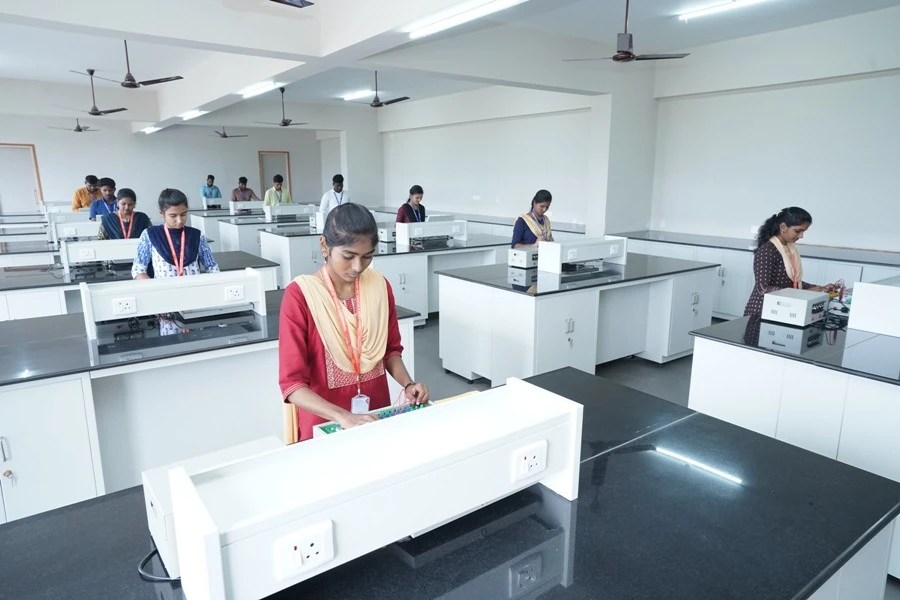
You will have access to state-of-the-art labs and classrooms to enhance your learning.

Active Campus Life
Join clubs, events, and activities that will help you develop leadership and networking skills.
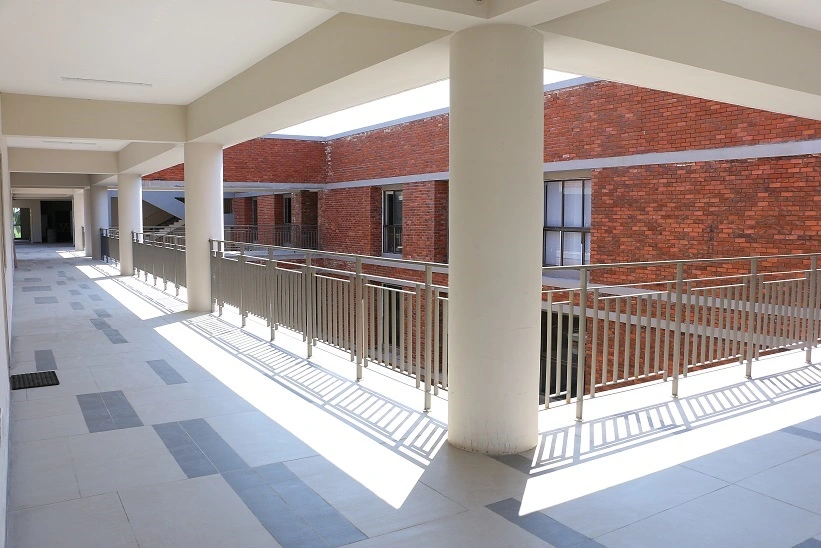
Spread over 150 acres
At Takshashila University, you will have ample opportunities to hone your skills in real-world healthcare settings, utilising state-of-the-art medical facilities and simulation labs on our 150-acre campus.







Frequently Asked Questions (FAQs)
- What is M Sc Physics Admission process in Tamil Nadu?
M Sc Physics Admission requires B Sc Physics degree, merit-based selection through entrance exams or GATE scores. Colleges conduct merit-based counseling for M Sc Physics Admission in Tamil Nadu. - What is the M Sc Physics Fees structure in Tamil Nadu?
M Sc Physics Fees: Government colleges ₹20,000-₹50,000/year; Private colleges ₹1,50,000-₹4,00,000/year. Total 2-year M Sc Physics Fees: ₹40,000-₹1 lakh (government) to ₹3-8 lakhs (private). - What is M Sc Physics Eligibility Criteria in Tamil Nadu?
M Sc Physics Eligibility Criteria: B Sc Physics degree from recognized university. Minimum 50-55% aggregate marks. Valid entrance exam score or merit-based selection for M Sc Physics Eligibility Criteria. - Are M Sc Physics Scholarships available in Tamil Nadu?
Yes. M Sc Physics Scholarships include government merit scholarships, SC/ST/OBC category scholarships, research fellowships, and education loans with 8-10% interest. - What is M Sc Physics Fee Structure payment options?
M Sc Physics Fee Structure offers annual payment, semester payment options. Education loans available for M Sc Physics Fee Structure covering full cost with 8-10% interest rates. - Which colleges have best Top M Sc Physics Colleges with Placement in Tamil Nadu?
Top M Sc Physics Colleges with Placement: Loyola College Chennai (92%+ placement), Madras Christian College (90% placement), Christ University (94% placement), Presidency College offer excellent research placement. - What research physicist and technology scientist roles can I pursue after M Sc Physics?
After M Sc Physics, pursue Research Physicist, Experimental Physicist, Quantum Computing Engineer, Materials Scientist, Astrophysicist, or Technology Engineer roles. - What is the average salary for research physicists after M Sc Physics graduation?
M Sc Physics graduates earn ₹7-14 lakhs starting salary as research physicists. With 5-7 years experience: ₹18-30 lakhs. Senior researchers: ₹30-50+ lakhs annually. - Are research internship opportunities available during M Sc Physics?
Yes. M Sc Physics research internships with research labs, universities, technology firms, and innovation centers. Research stipends: ₹8,000-₹15,000/month with publication potential. - Can I pursue PhD after M Sc Physics degree?
Yes. M Sc Physics graduates fully eligible to pursue PhD Physics and advanced postdoctoral research for specialized physics research careers. - What entrance exams are required for M Sc Physics Admission in Tamil Nadu?
M Sc Physics typically requires GATE Physics, JEE Advanced, or college-specific entrance exams. Merit-based selection available for top B Sc Physics performers. - How does M Sc Physics benefit aspiring research physicists?
M Sc Physics provides advanced research training, experimental expertise, analytical skills, research methodology—essential for research physicists in research and technology roles. - What is the duration of M Sc Physics postgraduate program?
M Sc Physics spans 2 years (4 semesters) with advanced classroom learning, research projects, thesis research, laboratory experiments, and research training integrated throughout. - Can I pursue international research opportunities after M Sc Physics?
Yes. M Sc Physics graduates secure research positions with international research institutions, universities, and technology companies requiring research physicists worldwide. - What advanced physics and research skills develop in M Sc Physics?
M Sc Physics develops: quantum mechanics, experimental physics, research methodology, analytical techniques, thesis research, physics innovation—core advanced physics professional skills. - Are government research positions available after M Sc Physics in Tamil Nadu?
Yes. Government positions available for M Sc Physics graduates in research labs, CSIR centers, space agencies, and government research institutions. - What is the future scope of M Sc Physics in Tamil Nadu?
Future scope for research physicists: exceptional with quantum computing growth, research expansion, technology advancement, and global physics research demand. - How to pick the best M Sc Physics college in Tamil Nadu?
Pick best M Sc Physics college: check placement rates (85-95%), average salary (₹7-14 lakhs), research facilities, faculty research credentials, alumni research success. - What are current industry trends in M Sc Physics for Tamil Nadu?
Industry Trends: quantum computing development, nanotechnology advancement, renewable energy research, AI-physics integration, space technology innovation, materials science breakthrough. - Why choose M Sc Physics over other postgraduate degrees in Tamil Nadu?
Choose M Sc Physics: advanced research training, strong placement (85-95%), diverse research career paths, higher physicist salaries, PhD eligibility, global research opportunities, publication potential.