
B.Sc. (Hons) Agriculture
Study B Sc Hons Agriculture in Tamil Nadu at Takshashila University
- Hands-on Training
- Faculty with International Experience
- Advanced Curriculum
- Upto 100% Scholarship based on merit

About the Course
The B.Sc. (Hons.) Agriculture programme equips students with the knowledge, technical skills, and practical experience required to succeed in modern agriculture. As one of the leading B Sc Hons Agriculture colleges in Tamil Nadu, Takshashila University offers an industry-focused curriculum that combines classroom learning with field training, laboratory sessions, and research activities.
The programme covers crop production, soil science, plant breeding, agricultural economics, horticulture, agricultural engineering, pest management, and sustainable farming practices. Students pursuing B Sc Hons Agriculture in Tamil Nadu gain hands-on experience through internships, field visits, and experiential learning, preparing them to address real-world agricultural challenges and contribute to the future of the farming sector.
Why Choose B.Sc. (Hons) Agriculture?
B.Sc. (Hons.) Agriculture is designed to prepare students for modern farming, agribusiness, and agricultural research through a blend of academic learning and practical training. The programme covers crop production, soil science, horticulture, agricultural engineering, plant breeding, and sustainable farming practices, helping students develop the knowledge and skills required to address real-world agricultural challenges.
Recognized among the Best Agriculture Universities in Tamil Nadu, Takshashila University offers industry-oriented education supported by experienced faculty, modern laboratories, experimental farms, field visits, internships, and research opportunities. Students gain valuable hands-on experience that prepares them for careers in agriculture, agribusiness, government services, research organizations, and entrepreneurship.
Industry Recognition
Study a comprehensive curriculum covering crop production, soil science, horticulture, agricultural engineering, plant protection, and sustainable farming with practical field-based learning.
Experienced Faculty
Learn from qualified faculty members who combine academic expertise with practical agricultural knowledge, guiding students through classroom learning, research, and field training.
Practical Field Training
Gain hands-on experience through farm practices, laboratory sessions, internships, field visits, and research projects that build confidence and industry-ready skills.
Strong Placement Support
Benefit from career guidance, industry interactions, and placement assistance, opening opportunities in agribusiness companies, research institutions, government departments, and agri-tech organizations.
SCOPE OF THE PROGRAMME
Graduates can pursue careers in agro-based business sectors such as seeds, fertilizer, chemicals, farm machinery for agriculture, and processing food. and also employed in research centers, agro clinics, weather and price forecasting. They can also become entrepreneurs in agriculture.
Course Curriculum

Year 1
The first year introduces you to fundamental agricultural sciences, including soil science, plant biology, and basic crop production.
Key Subjects: Introduction to Agriculture, Soil Science, Agricultural Economics, Plant Biology, Crop Production.
Year 2
The second year builds on the basics, focusing on pest management, irrigation techniques, and agricultural machinery.
Key Subjects: Pest and Disease Management, Irrigation Systems, Agricultural Engineering, Plant Protection, Crop Management.
Year 3
In the third year, you will study advanced topics like sustainable farming practices, agricultural marketing, and advanced crop production.
Key Subjects: Sustainable Agriculture, Agricultural Marketing, Plant Breeding, Advanced Crop Management, Rural Development.
Year 4
The final year is dedicated to practical applications through internships, research projects, and specialised studies in agricultural management and policy.
Key Subjects: Agricultural Research Methods, Rural Sociology, Agricultural Policies, Internship, and Project Work.
Career Scope
Graduates of the B.Sc. (Hons.) Agriculture programme can build rewarding careers in both government and private sectors. Opportunities are available in agribusiness companies, seed and fertilizer industries, food processing organizations, agricultural research institutions, banking, rural development agencies, and agri-tech startups.
Students can also prepare for careers as Agricultural Officers, Farm Managers, Research Associates, Agricultural Extension Officers, Crop Consultants, and Entrepreneurs. With strong industry exposure and placement support, B Sc Hons Agriculture Placement in Tamil Nadu continues to create excellent career opportunities for graduates seeking long-term growth in the agricultural sector.
- Many Agri graduates can crack easily the Civil service, Bank examination and TNPSC examination and also only graduate can eligible to apply for Agricultural officer.
- Graduates can pursue careers in agro-based business sectors such as seeds, fertilizer, chemicals, farm machinery for agriculture, and processing food. and also employed in research centers, agro clinics, weather and price forecasting. They can also become entrepreneurs in agriculture.
Why TAKSHASHILA?

At Takshashila University, we aim to provide you with a learning experience that will set you up for success in the biotechnology field:
Up-to-Date Education
The course will cover the latest in biotechnology and its applications in industries like healthcare, food, and agriculture.
Personalized Learning
With small class sizes, you will receive individual attention from professors, which will help you understand complex concepts easily.
Practical Experience
You will get hands-on experience through lab work, research projects, and internships to make you industry-ready.
Strong Networking Opportunities
You will connect with professionals, experts, and fellow students to help you in your career.

To apply for the B.Sc. in Biotechnology, you must meet the following requirements:
- Academic Qualification: Eligibility for Admission A candidate who has passed the higher secondary examination in any one of the biological sciences (botany/zoology, biology). (Academic/Vocational stream Agri, Home Science, Poultry) under the higher secondary board of examination, Tamil Nadu.
- Minimum Marks: You need to have at least 50% marks in your qualifying exam.

For All Programmes except MBA, MCA, M.Tech, and Integrated Programmes offered by Sunstone, FacePrep, Kalvium and NxtWave
S.No | % of Marks | Scholarship Amount in Tuition Fees per year |
1 | 60% – 75% | 10% |
2 | Above 75 % – 90 % | 25 % |
3 | Above 90 % | 50 % |
Calculation of percentage of Marks (+2 of HSC / 2nd Year of APBIM or +2 of CBSE or Equivalent)
- Engineering – Average marks in Mathematics, Physics, Chemistry/Computer Science
- Lateral Entry – Average marks in Diploma Programme.
- Agriculture – Average marks in Physics, Chemistry, Biology / Botany &Zoology
- AHS / BPT / Pharmacy – Average marks in Physics, Chemistry, Biology / Botany &Zoology/Bio Tech
- UG – Arts & Science / Hotel Management – Overall +2 marks – (+2 of HSC / 2nd Year of APBIM or +2 of CBSE or Equivalent)
- PG – Overall % in UG
- Diploma – Average mark in 10th /Equivalent
MBA, MCA, M. Tech, and Integrated Programmes offered by Sunstone, FacePrep, Kalvium and NxtWave – No Academic Scholarship applicable.
Experience Beyond the Classroom at Takshashila University
Takshashila University is more than just classrooms. You will experience a lively and supportive environment where you can grow personally and professionally:
What You Can Look Forward To

Interactive Learning
Get involved in projects, research, and practical sessions that let you apply what you learn.

Modern Facilities
You will have access to state-of-the-art labs and classrooms to enhance your learning.

Active Campus Life
Join clubs, events, and activities that will help you develop leadership and networking skills.
Spread over 150 acres
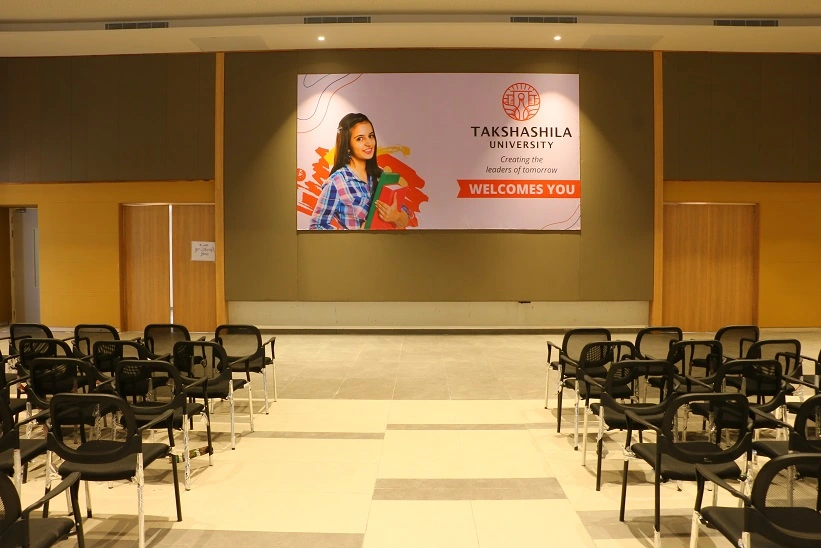
At Takshashila University, you will have ample opportunities to hone your skills in real-world healthcare settings, utilising state-of-the-art medical facilities and simulation labs on our 150-acre campus.








Apply to the Best B Sc Hons Agriculture College in Tamil Nadu
FAQs
1. Which Is the Best B.Sc (Hons.) Agriculture College in Tamil Nadu?
Takshashila University is among the best B.Sc (Hons.) Agriculture colleges in Tamil Nadu, offering ICAR-aligned education, modern laboratories, experiential field learning, experienced faculty, internships, research opportunities, and placement support for successful agricultural careers.
2. What Is B.Sc (Hons.) Agriculture?
B.Sc (Hons.) Agriculture is a four-year undergraduate programme that focuses on crop production, soil science, horticulture, agricultural engineering, agronomy, plant protection, and agribusiness through practical field training and scientific learning.
3. Why Choose B.Sc (Hons.) Agriculture at Takshashila University?
Takshashila University provides industry-oriented education with smart farming techniques, field demonstrations, research projects, internships, modern laboratories, and experienced faculty to prepare students for careers in agriculture.
4. How Can I Apply for B.Sc (Hons.) Agriculture Admission in Tamil Nadu?
Students who have completed Higher Secondary education with Physics, Chemistry, and Biology or Agriculture and meet the university’s eligibility criteria can apply for B.Sc (Hons.) Agriculture admission at Takshashila University.
5. What Is the Eligibility Criteria for B.Sc (Hons.) Agriculture in Tamil Nadu?
Students who have completed Class 12 with Physics, Chemistry, Biology, Agriculture, or related subjects from a recognised board are generally eligible to apply for the programme.
6. What Is the Duration of the B.Sc (Hons.) Agriculture Course?
The B.Sc (Hons.) Agriculture programme is a four-year undergraduate degree consisting of eight semesters with classroom learning, laboratory practicals, field visits, internships, and experiential training.
7. What Subjects Are Covered in B.Sc (Hons.) Agriculture?
The curriculum includes Agronomy, Soil Science, Plant Breeding, Agricultural Economics, Entomology, Plant Pathology, Horticulture, Agricultural Engineering, Agricultural Extension, and Crop Production.
8. What Is the B.Sc (Hons.) Agriculture Fee Structure in Tamil Nadu?
The B.Sc (Hons.) Agriculture fee structure varies among universities. Takshashila University provides transparent fee details and admission guidance for prospective students.
9. Does Takshashila University Offer Scholarships for B.Sc (Hons.) Agriculture Students?
Yes. Takshashila University offers scholarships for eligible students based on academic performance and university scholarship policies.
10. Are Internship Opportunities Available for Agriculture Students?
Yes. Students receive practical training through internships, agricultural farms, research centres, agri-industries, field demonstrations, and industry collaborations.
11. What Is the Scope of Agriculture in Tamil Nadu?
Agriculture offers strong career opportunities in agribusiness, food production, sustainable farming, agricultural research, biotechnology, precision agriculture, and government departments.
12. What Career Options Are Available After B.Sc (Hons.) Agriculture?
Graduates can work as Agricultural Officers, Agronomists, Soil Scientists, Farm Managers, Agricultural Consultants, Research Associates, Agri-Entrepreneurs, and Agribusiness Executives.
13. Can B.Sc (Hons.) Agriculture Graduates Get Government Jobs?
Yes. Graduates are eligible for Agricultural Officer positions, ICAR institutes, State Agriculture Departments, Banking, FCI, NABARD, UPSC, TNPSC, and other government organizations.
14. How Are the Placement Opportunities for Agriculture Students?
Takshashila University provides placement assistance through internships, career guidance, industry collaborations, campus recruitment drives, and skill development programmes.
15. Can I Study Abroad After Completing B.Sc (Hons.) Agriculture?
Yes. Graduates can pursue postgraduate studies abroad in Agriculture, Agronomy, Horticulture, Plant Science, Agricultural Biotechnology, Environmental Science, and Food Science.
16. What Entrance Exams Are Required for B.Sc (Hons.) Agriculture in Tamil Nadu?
Admission requirements vary among institutions. Students should check the latest admission guidelines of Takshashila University for eligibility and admission details.
17. What Salary Can I Expect After Completing B.Sc (Hons.) Agriculture?
Salary depends on specialization, skills, employer, and experience. Graduates with practical field knowledge and technical expertise can earn competitive salary packages.
18. What Is the Future Scope of Agriculture?
The future of agriculture is driven by precision farming, smart irrigation, drone technology, artificial intelligence, biotechnology, sustainable agriculture, and climate-smart farming practices.
19. Who Are the Top Recruiters for B.Sc (Hons.) Agriculture Graduates?
Agriculture graduates are recruited by agri-business companies, seed industries, fertilizer companies, food processing industries, research institutes, government departments, and agricultural consultancies.
20. What Industry Trends Are Shaping Agriculture Careers?
Current trends include Precision Agriculture, AI-powered farming, Smart Irrigation, Agri-Tech Startups, Organic Farming, Drone Technology, Sustainable Agriculture, and Climate-Resilient Farming.