
M.Tech. IoT and Sensor Systems
Explore the best M.Tech IoT & Sensor Systems colleges in Tamil Nadu. Gain advanced industry-ready skills, hands-on learning, and apply today!
- Hands-on Training
- Faculty with International Experience
- Advanced Curriculum
- Upto 100% Scholarship based on merit

About the Course
The M.Tech in IoT and Sensor Systems at Takshashila University is a two-year postgraduate programme built for engineering graduates who want to specialise in the design, development, and research of connected sensor technologies. Recognised among the best colleges for IoT and Sensor Systems in Tamil Nadu, the course combines a strong foundation in electronics and communication with advanced specialisation in sensor networks, embedded intelligence, and IoT architectures.
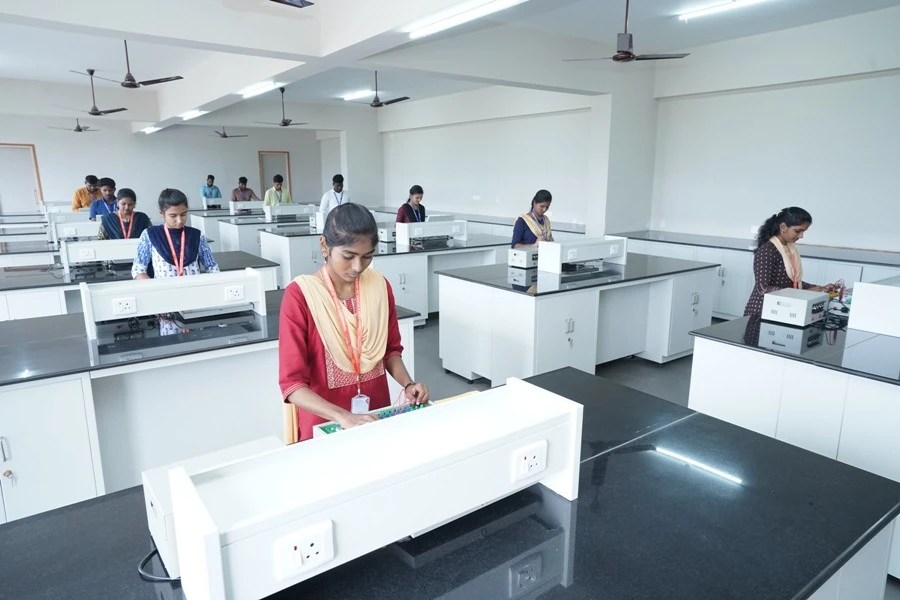
The programme balances advanced theory with intensive research and practical work. Students study sensor design, wireless sensor networks, embedded systems, edge and cloud computing, and IoT data analytics, alongside a research thesis and industry-linked projects. Hands-on research labs and internships ensure learning extends well beyond the classroom. As one of the leading IoT and Sensor Systems colleges in Tamil Nadu, Takshashila University pairs experienced faculty with active research and industry collaborations, giving students exposure to real-world problems, cutting-edge tools, and publication opportunities. This blend of academics and research makes it a standout choice for postgraduate IoT and sensor-focused education.
SCOPE OF THE PROGRAMME
IoT and sensor systems are among the fastest-growing frontiers in the global technology economy, with rising demand for specialists who can design, build, and research connected devices. Graduates from the top M.Tech IoT and Sensor Systems colleges in Tamil Nadu are equipped to enter senior technical, research, and academic roles across electronics, automotive, semiconductor, healthcare, and smart-infrastructure sectors. The specialisation opens pathways to careers as IoT architects, sensor design engineers, research scientists, and embedded systems specialists.
Postgraduate students at Takshashila University benefit from strong M.Tech IoT and Sensor Systems placement in Tamil Nadu, supported by dedicated career guidance, industry tie-ups, and an active recruiter network. Beyond immediate employment, the programme builds a strong foundation for doctoral research and academic careers, with graduates from leading IoT and Sensor Systems colleges in Tamil Nadu pursuing Ph.D. programmes and research positions in India and abroad. As one of the best M.Tech IoT and Sensor Systems colleges in Tamil Nadu, the university ensures every student is prepared for a long, high-impact career. For anyone exploring M.Tech IoT and Sensor Systems in Tamil Nadu, the programme offers a research-ready launchpad.
Why Choose M.Tech IoT and Sensor Systems
The Internet of Things and sensor technologies are driving the next wave of innovation, powering smart cities, industrial automation, healthcare devices, and connected infrastructure. For engineering graduates, a specialised postgraduate degree is the key to leadership and research roles in this fast-evolving field. Takshashila University is recognised among the best colleges for IoT and Sensor Systems in Tamil Nadu, offering an advanced, research-driven curriculum that blends academic depth with real-world, hands-on learning.
The M.Tech IoT and Sensor Systems in Tamil Nadu equips postgraduate students with advanced skills in sensor design, embedded systems, wireless sensor networks, edge computing, and IoT data analytics. Through project-based coursework, research labs, and industry internships, students develop the technical depth, research ability, and problem-solving expertise that today’s connected-technology industry and academia demand.
As one of the top M.Tech IoT and Sensor Systems colleges in Tamil Nadu, the programme is backed by experienced faculty, advanced sensor and IoT research labs, and strong industry-academia collaborations that give students a real competitive edge. These partnerships translate into consistent M.Tech IoT and Sensor Systems placement in Tamil Nadu, connecting graduates with leading electronics, automotive, semiconductor, and R&D firms.
If you are looking for the best IoT and Sensor Systems universities in Tamil Nadu, Takshashila University provides research-focused learning, modern infrastructure, and career-oriented postgraduate education. Widely regarded among the best engineering colleges for IoT and Sensor Systems in Tamil Nadu, the university prepares students for advanced roles in IoT engineering, sensor design, research, and the emerging technologies powering a connected world.
Industry Recognition
Study an advanced curriculum covering sensor design, embedded systems, wireless sensor networks, edge computing, and IoT analytics. As one of the top IoT and Sensor Systems colleges in Tamil Nadu, Takshashila University prepares postgraduate students with the research and technical skills demanded by today's connected-technology sector.
Career-Focused Learning
Recognised among the best M.Tech IoT and Sensor Systems colleges in Tamil Nadu, the programme combines advanced coursework with research projects, industry internships, and hands-on lab training to build deep technical and research expertise.
Excellent Placement Support
Dedicated career guidance, industry collaborations, and a strong recruiter network drive excellent M.Tech IoT and Sensor Systems placement in Tamil Nadu, helping graduates secure roles with leading electronics, semiconductor, and R&D organisations.
Trusted University for IT Education
Recognised among the best IoT and Sensor Systems universities in Tamil Nadu, Takshashila University offers innovation-driven postgraduate education, experienced faculty, modern research labs, and global career pathways.
Course Curriculum

First Year (Foundation and Core Concepts Stage)
The first year focuses on building a strong foundation in core technologies required for IoT systems. Students are introduced to programming, electronics, sensor fundamentals, and communication technologies. Emphasis is given to integrating hardware and software concepts essential for smart system design using Internet of Things and Embedded Systems.
Key Subjects: Wireless Sensor Protocols and Programming, Computer Networks and Management, Embedded System Design and Architecture, Embedded Systems and Real Time Operating System, IoT Architecture and Protocols, Cloud Architecture and Computing
Second Year (Specialization and Industry Readiness)
In the final stage, students focus on research, innovation, and real-world applications. They undertake a major project or internship, applying knowledge to solve practical problems in areas like smart cities, healthcare, and automation.
Key Subjects:
Project Work / Thesis, Internship, Research Methodology, Seminar, Industry-Oriented Project Development
Career Opportunities After M.Tech IoT and Sensor Systems
Graduates of the M.Tech in IoT and Sensor Systems are in high demand across both industry and research sectors. With advanced, specialised skills, students benefit from strong M.Tech IoT and Sensor Systems placement in Tamil Nadu, opening doors to senior and research-oriented roles, including
Career paths span electronics, automotive, semiconductors, healthcare, and smart-infrastructure sectors, as well as research and academia — making this one of the most future-proof postgraduate specialisations available among the best colleges for IoT and Sensor Systems in Tamil Nadu.
IoT Engineer
- Role: Design, develop, and implement IoT-enabled devices and systems, integrating sensors, microcontrollers, and network connectivity for smart applications.
- Salary: ₹5,00,000 to ₹12,00,000 per annum
Embedded Systems Engineer
- Role: Develop firmware and hardware solutions for embedded devices, including microcontroller programming and real-time system integration.
- Salary: ₹4,50,000 to ₹10,00,000 per annum
Sensor Design Engineer
- Role: Design, calibrate, and integrate sensors for applications in healthcare, agriculture, industrial automation, and smart cities.
- Salary: ₹5,50,000 to ₹12,00,000 per annum
IoT Solutions Architect
- Role: Plan and implement end-to-end IoT solutions, including hardware, software, cloud integration, and security for enterprises.
- Salary: ₹10,00,000 to ₹20,00,000 per annum
Data Analyst / IoT Data Scientist
- Role:Analyze sensor and IoT data to provide actionable insights, predictive analytics, and optimization for intelligent systems.
- Salary: ₹6,00,000 to ₹15,00,000 per annum
Research & Development Engineer
- Role: Conduct R&D in emerging IoT, AIoT, and sensor technologies, focusing on innovation, prototyping, and product development.
- Salary: ₹6,00,000 to ₹14,00,000 per annum
Entrepreneur / Startup Founder
- Role: Develop smart products, IoT platforms, or sensor-based solutions targeting industries like healthcare, agriculture, or home automation.
- Salary: Variable
Why TAKSHASHILA?

Industry-Relevant Curriculum
The B.Tech programme is crafted to meet the latest industry requirements, ensuring students gain up-to-date knowledge and skills in electronics and communications engineering.
Hands-On Experience
You will work with modern tools and technologies in state-of-the-art laboratories, gaining practical experience that directly applies to industry demands.
Expert Faculty
Learn from distinguished faculty members with years of academic and industry experience.
Global Career Opportunities
Takshashila University’s global network of partners and industry contacts will help you access career opportunities worldwide.

- Candidates must have earned at least 50% in science in their 10th grade, +2, or equivalent, and at least 60% in their undergraduate studies at a reputable university, including courses in physics, chemistry, and mathematics.
- Entrance exams or personal interviews may be required as part of the selection process.

For All Programmes except MBA, MCA, M.Tech, and Integrated Programmes offered by Sunstone, FacePrep, Kalvium and NxtWave
|
S.No |
% of Marks |
Scholarship Amount in Tuition Fees per year |
|
1 |
60% – 75% |
10% |
|
2 |
Above 75 % – 90 % |
25 % |
|
3 |
Above 90 % |
50 % |
Calculation of percentage of Marks (+2 of HSC / 2nd Year of APBIM or +2 of CBSE or Equivalent)
- Engineering – Average marks in Mathematics, Physics, Chemistry/Computer Science
- Lateral Entry – Average marks in Diploma Programme.
- Agriculture – Average marks in Physics, Chemistry, Biology / Botany &Zoology
- AHS / BPT / Pharmacy – Average marks in Physics, Chemistry, Biology / Botany &Zoology/Bio Tech
- UG – Arts & Science / Hotel Management – Overall +2 marks – (+2 of HSC / 2nd Year of APBIM or +2 of CBSE or Equivalent)
- PG – Overall % in UG
- Diploma – Average mark in 10th /Equivalent
MBA, MCA, M. Tech, and Integrated Programmes offered by Sunstone, FacePrep, Kalvium and NxtWave – No Academic Scholarship applicable.
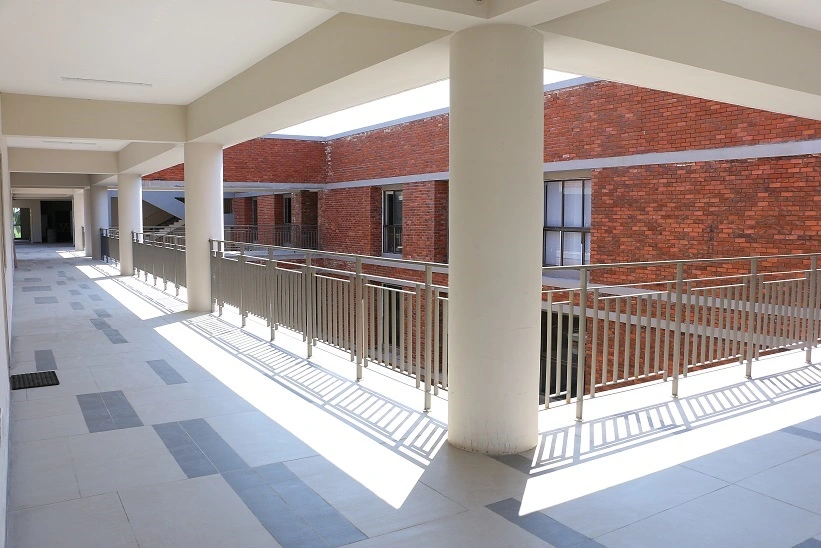
Spread over 150 acres
At Takshashila University, you will have ample opportunities to hone your skills in real-world healthcare settings, utilising state-of-the-art medical facilities and simulation labs on our 150-acre campus.






Advance Your Career with M.Tech IoT and Sensor Systems
FAQs
Q1. Which are the best colleges for IoT and Sensor Systems in Tamil Nadu?
Takshashila University ranks among the best colleges for IoT and Sensor Systems in Tamil Nadu, offering a research-driven curriculum, advanced sensor labs, and strong placement support.
Q2. What are the top 10 M.Tech IoT and Sensor Systems colleges in Tamil Nadu?
The top colleges combine advanced coursework, experienced research faculty, hands-on labs, and industry tie-ups. Takshashila University is a leading choice for postgraduate IoT and sensor training.
Q3. What is the M.Tech IoT and Sensor Systems admission process in Tamil Nadu?
Admission is through the university application and valid GATE/TANCET scores where applicable, followed by document verification and counselling.
Q4. What is the M.Tech IoT and Sensor Systems eligibility criteria in Tamil Nadu?
Candidates must hold a B.E./B.Tech in ECE, EEE, CSE, or a related discipline from a recognised university, meeting the minimum marks set by the university. (Insert exact %/GATE details.)
Q5. What are the M.Tech IoT and Sensor Systems fees and fee structure in Tamil Nadu?
The fee structure covers tuition, lab, and research charges, payable annually. (Insert current fee figures.)
Q6. Are M.Tech IoT and Sensor Systems scholarships available in Tamil Nadu?
Yes. Merit-based, GATE-based, and category-based scholarships are offered to eligible students. (Insert scholarship slabs.)
Q7. What is the scope of IoT and Sensor Systems in Tamil Nadu?
The scope is excellent, with rising demand for IoT and sensor specialists across electronics, automotive, semiconductor, and research sectors.
Q8. What are the career options after IoT and Sensor Systems in Tamil Nadu?
Graduates can work as IoT solutions architects, sensor design engineers, embedded systems specialists, research scientists, and R&D engineers.
Q9. What government jobs are available after M.Tech IoT and Sensor Systems in Tamil Nadu?
Opportunities include research and engineering roles in ISRO, DRDO, BEL, C-DAC, PSUs, and government research and academic institutions.
Q10. Which are the top M.Tech IoT and Sensor Systems colleges with placement in Tamil Nadu?
Takshashila University ranks among the leading M.Tech IoT and Sensor Systems colleges with placement in Tamil Nadu, backed by active recruiter tie-ups and industry-linked research.
Q11. How do I pick the best IoT and Sensor Systems college in Tamil Nadu?
Check for research infrastructure, sensor lab facilities, faculty expertise, placement records, and industry collaborations before choosing a college.
Q12. Why should I choose IoT and Sensor Systems in Tamil Nadu?
The programme offers advanced, research-driven learning, hands-on lab work, and high-demand career and research pathways in the fast-growing IoT sector.
Q13. What are the best internships for IoT and Sensor Systems students in Tamil Nadu?
Students access internships with electronics firms, semiconductor companies, and research organisations, gaining real-world experience in IoT and sensor projects.
Q14. What are the abroad study options after IoT and Sensor Systems in Tamil Nadu?
Graduates can pursue Ph.D. or advanced research programmes in IoT, embedded systems, or sensor technology at universities across the US, UK, Canada, and Australia.
Q15. What are the entrance exams for M.Tech IoT and Sensor Systems in Tamil Nadu?
Admission typically considers GATE and TANCET scores, along with university-level criteria. (Insert accepted exams.)
Q16. What is the salary after IoT and Sensor Systems in Tamil Nadu?
Salaries are competitive and grow rapidly with specialisation and experience, especially in sensor design, embedded systems, and R&D roles. (Insert salary range.)
Q17. What is the future scope of IoT and Sensor Systems in Tamil Nadu?
With billions of connected devices and sensors coming online, demand for skilled IoT and sensor specialists is projected to grow strongly over the coming decade.
Q18. What do you study in M.Tech IoT and Sensor Systems in Tamil Nadu?
Core topics include sensor design, wireless sensor networks, embedded systems, edge and cloud computing, IoT analytics, and a research thesis.
Q19. Who are the top recruiters for IoT and Sensor Systems graduates in Tamil Nadu?
Recruiters include leading electronics, semiconductor, automotive, and technology firms, along with research and R&D organisations.
Q20. What are the current industry trends in IoT and Sensor Systems in Tamil Nadu?
Key trends include edge AI, industrial IoT, smart sensors, 5G-enabled networks, and rising demand for research-driven IoT and sensor specialists.