
B.Tech. Electronics and Communication Engineering (IOT)
Are You Looking for the Best ECE IoT with IBM Colleges in Tamil Nadu?
- Hands-on Training
- Faculty with International Experience
- Advanced Curriculum
- Upto 100% Scholarship based on merit

About the Course
The Electronics and Communication Engineering (ECE) – Internet of Things (IoT) program at Takshashila University is designed to equip students with cutting-edge knowledge in smart technologies, connected systems, and intelligent automation. The curriculum is carefully structured by academic experts and industry professionals to integrate core engineering principles with modern IoT applications.
This program combines electronics, communication systems, embedded technologies, data analytics, and cloud computing to create a strong foundation in IoT ecosystems. Students develop the ability to design, implement, and manage smart devices and interconnected systems used in real-world applications such as smart cities, healthcare, agriculture, and industrial automation.
The program emphasizes hands-on learning, industry exposure, and innovation-driven education, enabling students to become skilled professionals ready to meet the demands of the rapidly evolving digital world.
Specialized learning in IoT includes key areas such as Embedded Systems, Sensors and Actuators, Wireless Communication, IoT Architecture, Cloud Computing, Edge Computing, Data Analytics, and Cybersecurity. Students gain practical experience in developing smart applications using modern tools and platforms.
SCOPE OF THE PROGRAMME
The programme provides in-depth knowledge in IoT system design, smart device integration, real-time data processing, and communication networks. Graduates will be prepared for careers in industries such as smart infrastructure, automation, healthcare technology, and digital transformation.
Why Choose ECE IoT with IBM in Tamil Nadu
The Internet of Things is transforming the way the world connects, powering smart homes, connected vehicles, industrial automation, and intelligent cities. Choosing the right specialisation is essential for building a future-ready career in this fast-growing field of electronics and communication. Takshashila University is recognised among the best ECE IoT with IBM colleges in Tamil Nadu, offering an industry-aligned curriculum co-designed with IBM that blends academic excellence with real-world, hands-on learning.
The B.Tech in ECE IoT with IBM in Tamil Nadu equips students with in-demand skills in embedded systems, sensor networks, wireless communication, cloud connectivity, and IoT application development. Through IBM-certified coursework, practical labs, live projects, and internships, students build the technical depth, analytical thinking, and problem-solving ability that today’s connected-technology industry demands. As one of the leading ECE IoT colleges in Tamil Nadu, the programme keeps pace with rapid industry change.
As one of the top ECE IoT with IBM colleges in Tamil Nadu, the programme is backed by experienced faculty, advanced electronics and IoT labs, and IBM tools and certifications that give students a real competitive edge. Strong industry collaborations translate into consistent ECE IoT with IBM placement in Tamil Nadu, connecting graduates with leading electronics, telecom, automotive, and technology firms.
If you are looking for the best ECE IoT with IBM universities in Tamil Nadu, Takshashila University provides research-driven learning, globally recognised IBM credentials, modern infrastructure, and career-focused education. Widely regarded among the best ECE IoT colleges in Tamil Nadu, the university prepares students for opportunities in IoT engineering, embedded systems, smart devices, and the emerging technologies powering a connected world.
Industry Recognition
Study an IBM-aligned curriculum covering embedded systems, sensor networks, wireless communication, cloud connectivity, and IoT application development. As one of the top ECE IoT colleges in Tamil Nadu, Takshashila University prepares students with the practical, industry-ready skills demanded by today's connected-technology sector.
Career-Focused Learning
Recognised among the top B.Tech ECE IoT colleges in Tamil Nadu, the programme combines classroom learning with IBM certifications, live projects, internships, and hands-on lab training to build job-ready technical skills.
Excellent Placement Support
Dedicated career guidance, IBM industry collaborations, and a strong recruiter network drive excellent ECE IoT placement in Tamil Nadu, helping students secure roles with leading electronics, telecom, and technology companies.
Trusted University for IT Education
Recognised among the best ECE IoT colleges in Tamil Nadu, Takshashila University offers innovation-driven education, IBM-certified faculty, modern IoT labs, and global career pathways.
Course Curriculum

Year 1 (Foundation Stage)
The first year focuses on fundamental engineering concepts and programming skills required for IoT systems.
Key Subjects:
Mathematics, Physics, Basic Electrical Engineering, Engineering Graphics, Programming in C/Python, Electronic Devices and Circuits
Second Year (Core Electronics & Communication Fundamentals)
Students gain knowledge in core Electronics and Communication Systems, which form the backbone of IoT technologies.
Key Subjects:
Analog Electronics, Digital Electronics, Network Theory, Signals and Systems, Microprocessors, Sensors and Actuators, Communication Systems
Third Year (IoT Systems & Embedded Technologies)
This stage focuses on IoT architecture, embedded systems, and real-time data acquisition. Students work on mini-projects and practical applications.
Key Subjects:
Embedded Systems, Internet of Things Architecture, Wireless Sensor Networks, Microcontrollers, Data Communication, Cloud Computing, IoT Protocols
Fourth Year (Advanced IoT & Industry Applications)
Students explore advanced topics and work on industry-based projects in smart systems and automation.
Key Subjects:
Edge Computing, IoT Security, Big Data Analytics, Artificial Intelligence for IoT, Smart Cities, Industrial IoT (IIoT), Project Work / Internship
Career Scope
Graduates of the BB.Tech. Electronics and Communication Engineering (IOT) are prepared for a wide range of roles in the electronics and telecommunications industries. Career opportunities include:
IoT Engineer
- Role: Design and develop IoT systems and smart devices
- Salary: ₹4,50,000 to ₹10,00,000 per annum
Embedded Systems Engineer
- Role: Develop hardware and software for embedded IoT devices
- Salary: ₹4,00,000 to ₹9,00,000 per annum
IoT Solutions Architect
- Role:Design large-scale IoT infrastructure and solutions
- Salary: ₹8,00,000 to ₹20,00,000 per annum
Cloud IoT Developer
- Role: Develop cloud-based IoT applications and data platforms
- Salary: ₹5,00,000 to ₹12,00,000 per annum
Data Analyst (IoT)
- Role: Analyze IoT-generated data for insights and decision-making
- Salary: ₹4,00,000 to ₹10,00,000 per annum
Wireless Communication Engineer
- Role: Develop communication systems for IoT devices
- Salary: ₹4,50,000 to ₹11,00,000 per annum
Cybersecurity Engineer (IoT)
- Role:Secure IoT systems from cyber threats
- Salary: ₹6,00,000 to ₹15,00,000 per annum
Research and Development Engineer
- Role: Work on advanced IoT innovations and smart technologies
- Salary: ₹6,00,000 to ₹18,00,000 per annum
Why TAKSHASHILA?

Industry-Relevant Curriculum
The B.Tech programme is crafted to meet the latest industry requirements, ensuring students gain up-to-date knowledge and skills in electronics and communications engineering.
Hands-On Experience
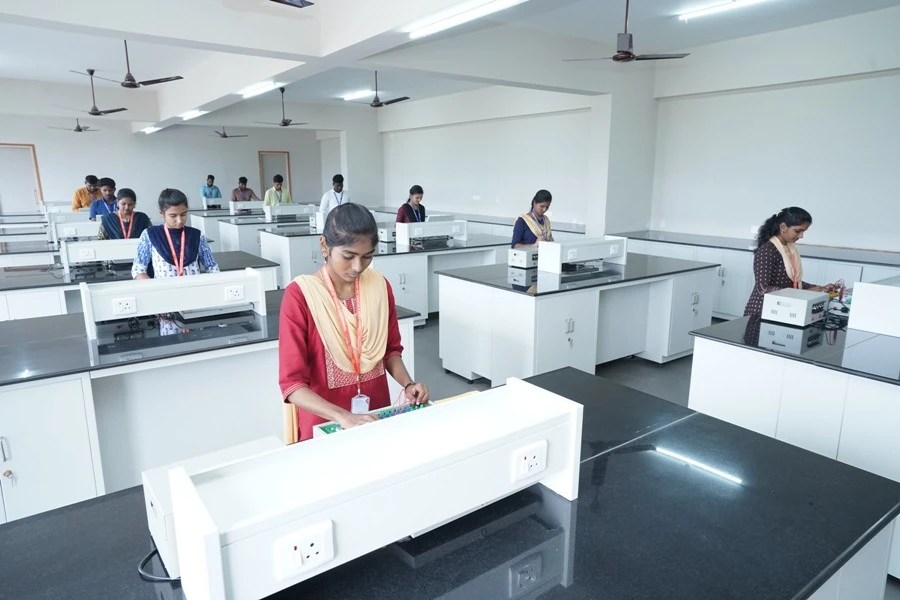
You will work with modern tools and technologies in state-of-the-art laboratories, gaining practical experience that directly applies to industry demands.
Expert Faculty
Learn from distinguished faculty members with years of academic and industry experience.
Global Career Opportunities
Takshashila University’s global network of partners and industry contacts will help you access career opportunities worldwide.

- Applicants must have completed their 10+2 or equivalent in Science with a minimum of 50% marks, including subjects like Physics, Chemistry, and Mathematics.
- Entrance exams or personal interviews may be required as part of the selection process.

For All Programmes except MBA, MCA, M.Tech, and Integrated Programmes offered by Sunstone, FacePrep, Kalvium and NxtWave
|
S.No |
% of Marks |
Scholarship Amount in Tuition Fees per year |
|
1 |
60% – 75% |
10% |
|
2 |
Above 75 % – 90 % |
25 % |
|
3 |
Above 90 % |
50 % |
Calculation of percentage of Marks (+2 of HSC / 2nd Year of APBIM or +2 of CBSE or Equivalent)
- Engineering – Average marks in Mathematics, Physics, Chemistry/Computer Science
- Lateral Entry – Average marks in Diploma Programme.
- Agriculture – Average marks in Physics, Chemistry, Biology / Botany &Zoology
- AHS / BPT / Pharmacy – Average marks in Physics, Chemistry, Biology / Botany &Zoology/Bio Tech
- UG – Arts & Science / Hotel Management – Overall +2 marks – (+2 of HSC / 2nd Year of APBIM or +2 of CBSE or Equivalent)
- PG – Overall % in UG
- Diploma – Average mark in 10th /Equivalent
MBA, MCA, M. Tech, and Integrated Programmes offered by Sunstone, FacePrep, Kalvium and NxtWave – No Academic Scholarship applicable.
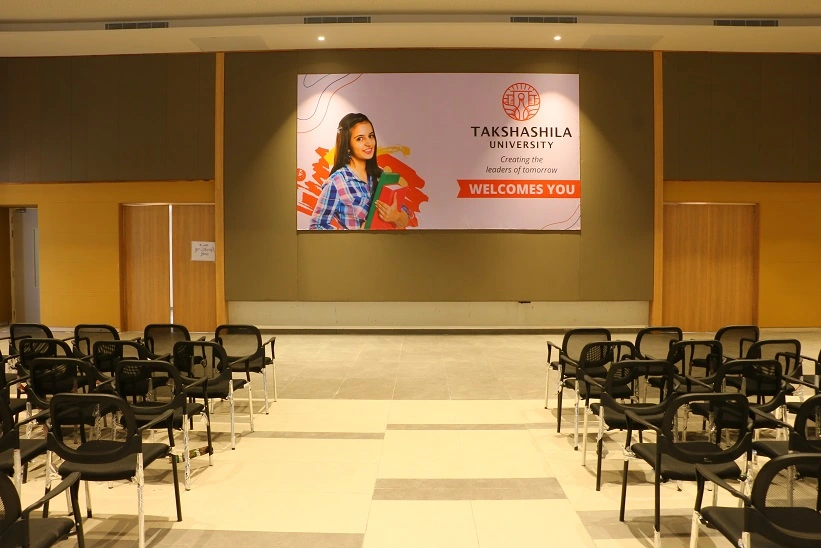
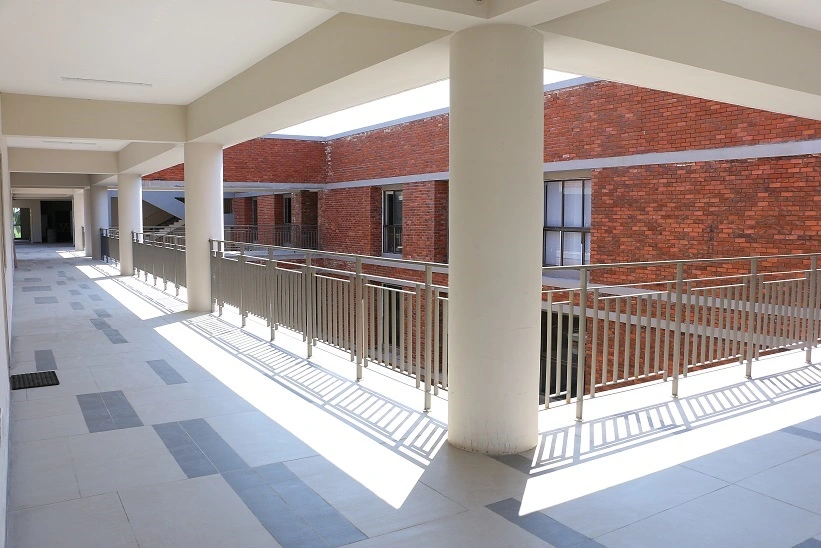
Spread over 150 acres
At Takshashila University, you will have ample opportunities to hone your skills in real-world healthcare settings, utilising state-of-the-art medical facilities and simulation labs on our 150-acre campus.






Start Your IoT Journey with IBM
FAQs
Q1. Which are the best colleges for ECE IoT with IBM in Tamil Nadu?
Takshashila University ranks among the best ECE IoT with IBM colleges in Tamil Nadu, offering an IBM-certified curriculum, advanced IoT labs, and strong placement support.
Q2. What are the top 10 ECE IoT with IBM colleges in Tamil Nadu?
The top colleges combine IBM-aligned coursework, experienced faculty, hands-on labs, and industry tie-ups. Takshashila University is a leading choice for job-ready IoT training.
Q3. What is the B.Tech ECE IoT with IBM admission process in Tamil Nadu?
Admission is through the university application form and relevant entrance exam scores, followed by document verification and counselling.
Q4. What is the B.Tech ECE IoT with IBM eligibility criteria in Tamil Nadu?
Candidates must have passed 10+2 with Physics, Chemistry, and Mathematics from a recognised board, meeting the minimum marks set by the university.
Q5. What are the B.Tech ECE IoT with IBM fees and fee structure in Tamil Nadu?
The fee structure covers tuition, IBM certification, and lab charges, payable annually.
Q6. Are B.Tech ECE IoT with IBM scholarships available in Tamil Nadu?
Yes. Merit-based and category-based scholarships are offered to eligible students. (Insert scholarship slabs.)
Q7. What is the scope of ECE IoT with IBM in Tamil Nadu?
The scope is excellent, with rising demand for IoT engineers across electronics, telecom, automotive, and smart-infrastructure sectors.
Q8. What are the career options after ECE IoT with IBM in Tamil Nadu?
Graduates can work as IoT engineers, embedded systems engineers, IoT solutions architects, network engineers, hardware designers, and automation engineers.
Q9. What government jobs are available after ECE IoT with IBM in Tamil Nadu?
Opportunities include roles in ISRO, DRDO, BSNL, PSUs, and government electronics, telecom, and smart-city departments.
Q10. Which are the top B.Tech ECE IoT with IBM colleges with placement in Tamil Nadu?
Takshashila University ranks among the leading ECE IoT with IBM colleges with placement in Tamil Nadu, backed by active recruiter tie-ups and IBM industry training.
Q11. How do I pick the best ECE IoT with IBM college in Tamil Nadu?
Check for IBM certification, IoT lab infrastructure, faculty expertise, placement records, and industry collaborations before choosing a college.
Q12. Why should I choose ECE IoT with IBM in Tamil Nadu?
The programme offers globally recognised IBM credentials, hands-on training, and high-demand career paths in the fast-growing IoT industry.
Q13. What are the best internships for ECE IoT students in Tamil Nadu?
Students access internships with electronics firms, telecom companies, and IBM-partnered organisations, gaining real-world experience in IoT projects.
Q14. What are the abroad study options after ECE IoT with IBM in Tamil Nadu?
Graduates can pursue master’s programmes in IoT, embedded systems, or electronics at universities across the US, UK, Canada, and Australia.
Q15. What are the entrance exams for ECE IoT with IBM in Tamil Nadu?
Admission may consider TNEA, university entrance tests, or relevant national-level exams. (Insert accepted exams.)
Q16. What is the salary after ECE IoT with IBM in Tamil Nadu?
Entry-level salaries are competitive and grow rapidly with experience and certifications, especially in IoT and embedded systems roles. (Insert salary range.)
Q17. What is the future scope of ECE IoT with IBM in Tamil Nadu?
With billions of connected devices coming online, demand for skilled IoT engineers is projected to grow strongly over the coming decade.
Q18. What do you study in ECE IoT with IBM in Tamil Nadu?
Core topics include embedded systems, sensor networks, wireless communication, cloud connectivity, and IoT application development, backed by IBM modules.
Q19. Who are the top recruiters for ECE IoT with IBM in Tamil Nadu?
Recruiters include leading electronics, telecom, automotive, and technology firms, and IBM-partnered organisations.
Q20. What are the current industry trends in ECE IoT with IBM in Tamil Nadu?
Key trends include edge computing, 5G-enabled IoT, industrial IoT, AI-integrated devices, and rising demand for certified IoT engineers.